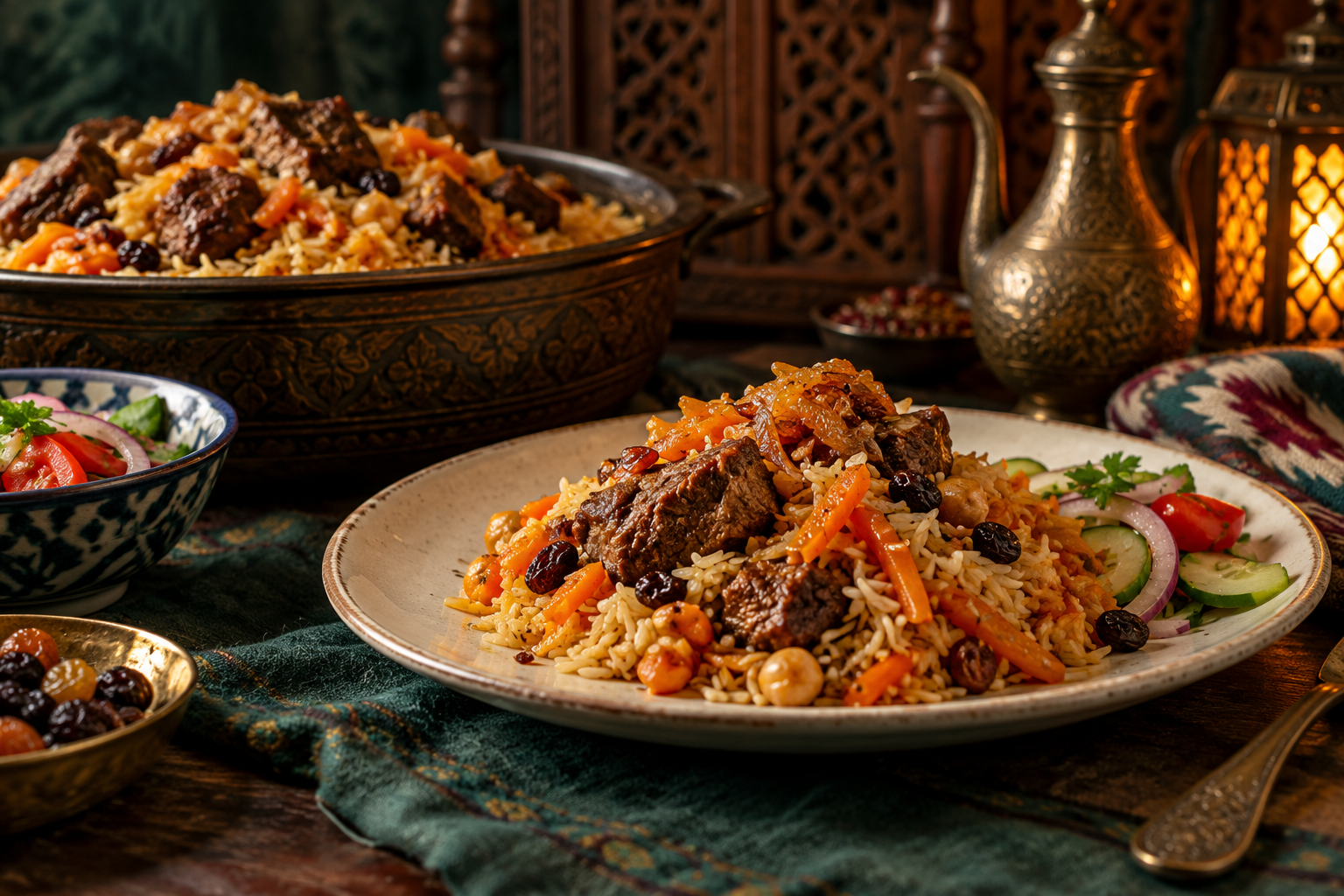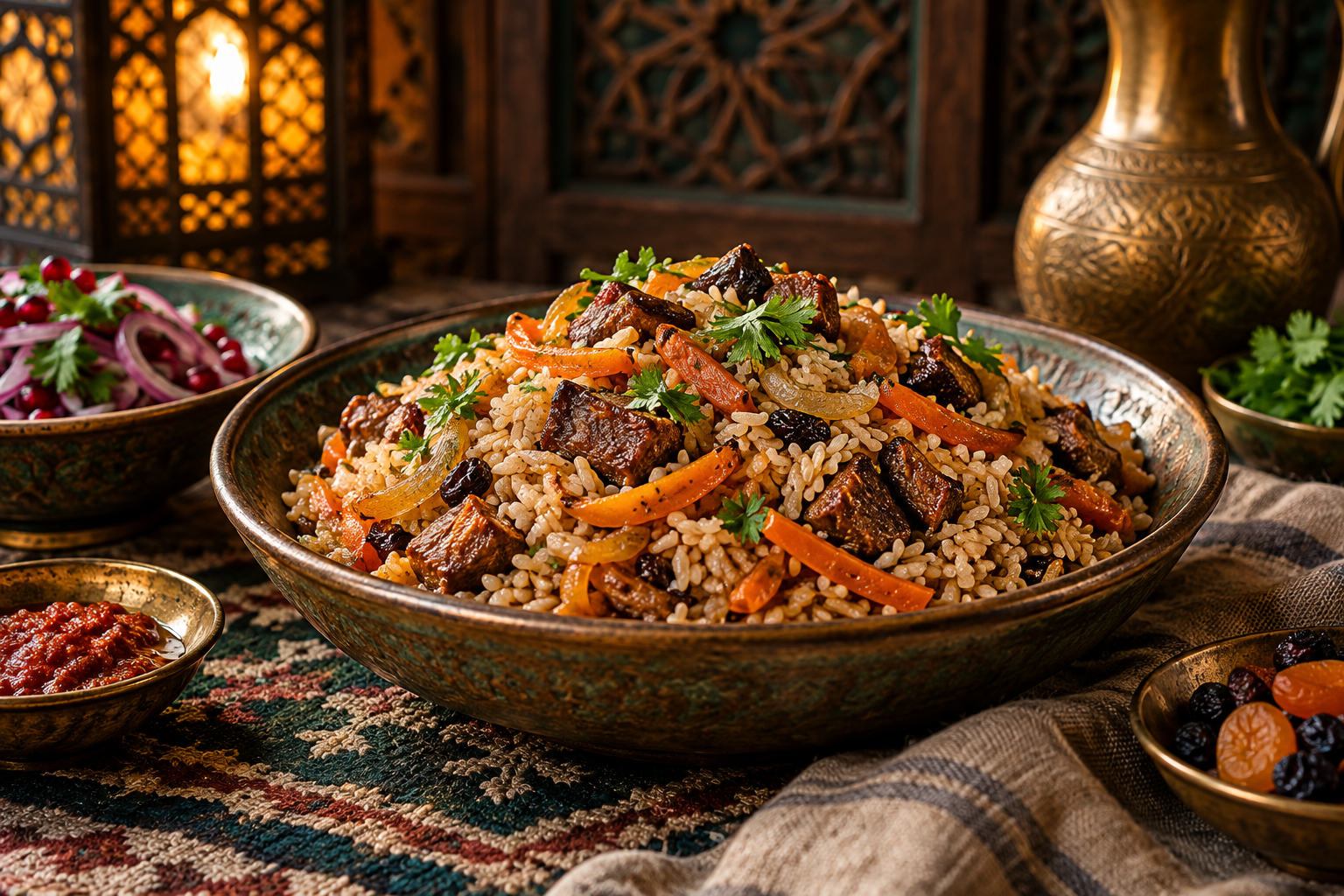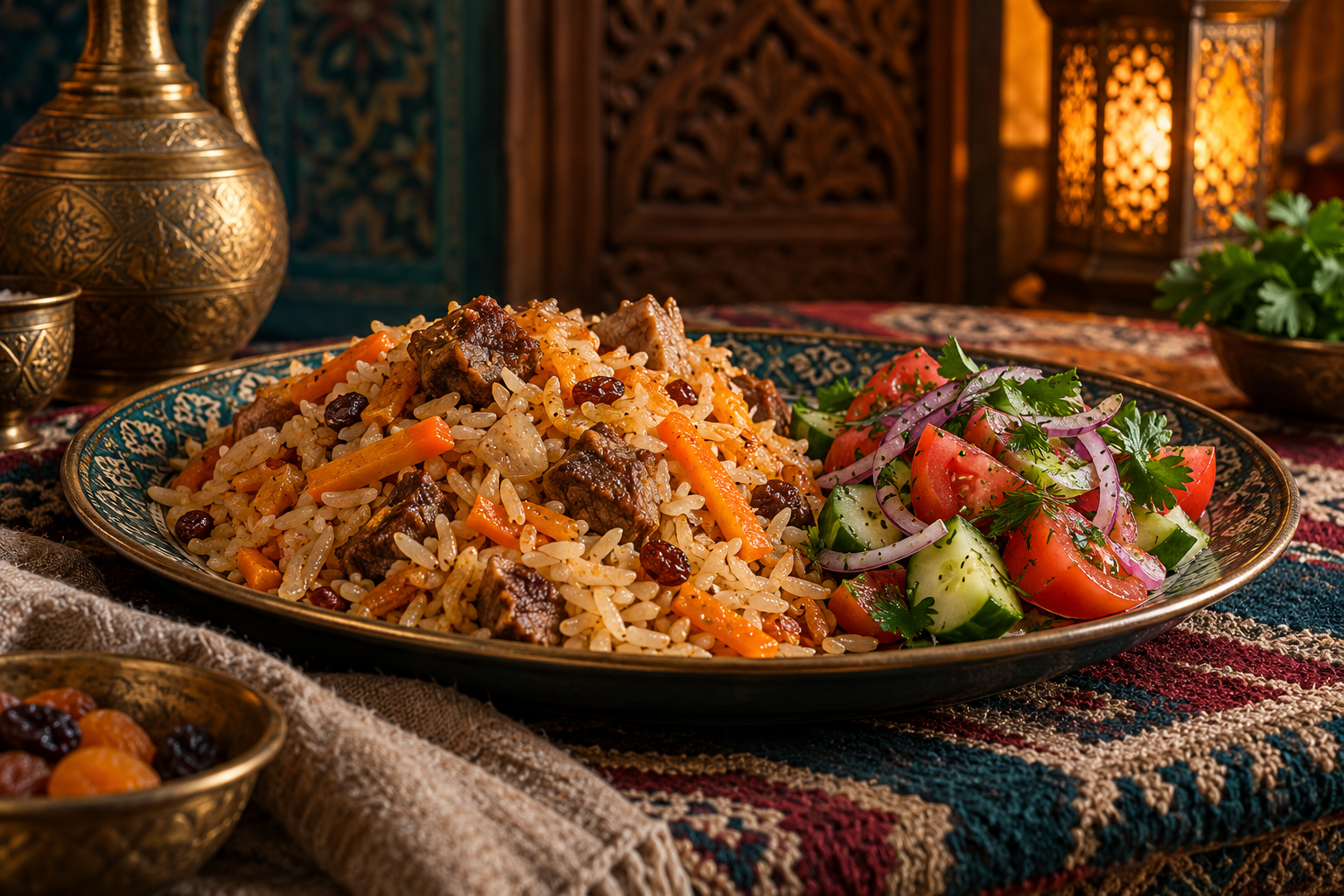
There is no single nutrition profile for everything called plov. A large meat-and-oil portion and a smaller vegetable-rich rice meal are different meals, even when they share a name.
Assess the whole plov meal
List the rice, fat, protein ingredients and vegetables you use. Include stock and serving accompaniments, not just what is visible in the pot. A nutrition estimate belongs to those quantities and the number of portions you actually serve.
Avoid claims that cumin, garlic or a traditional name make a meal treat a health condition. Enjoyable food and medical treatment are different subjects. This guide offers general meal-planning ideas, not individual clinical advice.
Consider the grain and the plate
USDA’s grain guidance encourages including whole-grain choices. If you try brown rice, use a recipe that accounts for its preparation rather than replacing white rice without changing the method.
In your own meal plan, consider a sensible first helping and a generous vegetable side. Keep drinking water available. Those are practical serving choices, not a guarantee that a dish fits every person’s nutritional needs.
Make changes you can repeat
Measure the oil you use instead of pouring freely. Record serving count and what you changed. An adaptation should remain enjoyable enough to cook again. If a health condition requires a specific diet, seek guidance that applies to you rather than a universal plov rule.
Continue reading: Plov calories: calculate your recipe instead of guessing.
Frequently asked questions
Does the name plov tell me its nutrition?
No. Ingredients, quantities and portion size determine the meal you are assessing.
Can plov be labelled a treatment food?
This article makes no treatment claims; individual medical diets need individual advice.
Can plov be part of a balanced diet?
Assess the actual ingredients, portions and whole meal. A sensible serving with vegetables can be a practical choice, but no dish name guarantees suitability for every person. Individual clinical diets require guidance specific to that person.
Is vegetarian pilaf healthier than meat plov?
Compare complete recipes instead of labels alone. Added fat, grain amount, protein ingredients and serving size all belong in the comparison. Avoid promising a universal health ranking from the presence or absence of one ingredient.
How can I make a lighter plov meal?
Measure added oil, plan realistic portions and consider the accompaniments. Keep changes recorded and enjoyable enough to repeat. This is general meal planning, not a promise of weight loss or treatment of a health condition.
Does plov have health benefits because it contains spices?
Do not turn a spice list into a medical claim. Enjoy the flavours and assess the full meal. Specific treatment or health-condition questions need appropriate evidence and individual professional guidance.
Sources & editorial notes
Original Tales & Table editorial guidance. Linked sources support the cultural, rice or safety points identified in the text. Recipe ideas are original kitchen drafts and have not been tested by our kitchen.