Persian rice traditions have their own documentary record. That record can enrich a comparison with plov when the dishes keep their separate names.
Polow and chelow in Persian food history
Encyclopaedia Iranica explains that polow and chelow became major rice preparations in Iran and distinguishes them by ingredients. It also discusses Safavid cookbooks and cautions that historical recipes differ from common modern versions. The source gives dates and texts, not a licence to call every pilaf Persian.
Treat a historical recipe as a document of its own time. A modern home recipe may use different ingredients, tools and serving habits.
Compare with a named plov
Take a complete polow recipe and a complete Uzbek palov recipe. Note whether rice is cooked separately, how other ingredients enter and how the food is presented. Do not replace the instructions in one with those from the other.
If you want to explore a crispy rice layer or a particular garnish, use a method written for that result. A search term alone is not cooking guidance.
Credit what you learn
Record the source of both dishes and label your adaptation. Our naming guide explains how to compare related words without claiming a single settled origin.
Frequently asked questions
Are polow and chelow the same?
Encyclopaedia Iranica distinguishes the two preparations by ingredients.
Are historical and modern polow recipes identical?
No. The cited source notes changes across periods.
Can I use one plov recipe for polow?
Use a complete recipe for the dish you intend to make.
Where should I start reading?
Begin with the Encyclopaedia Iranica rice-in-cooking article linked below.
Sources & editorial notes
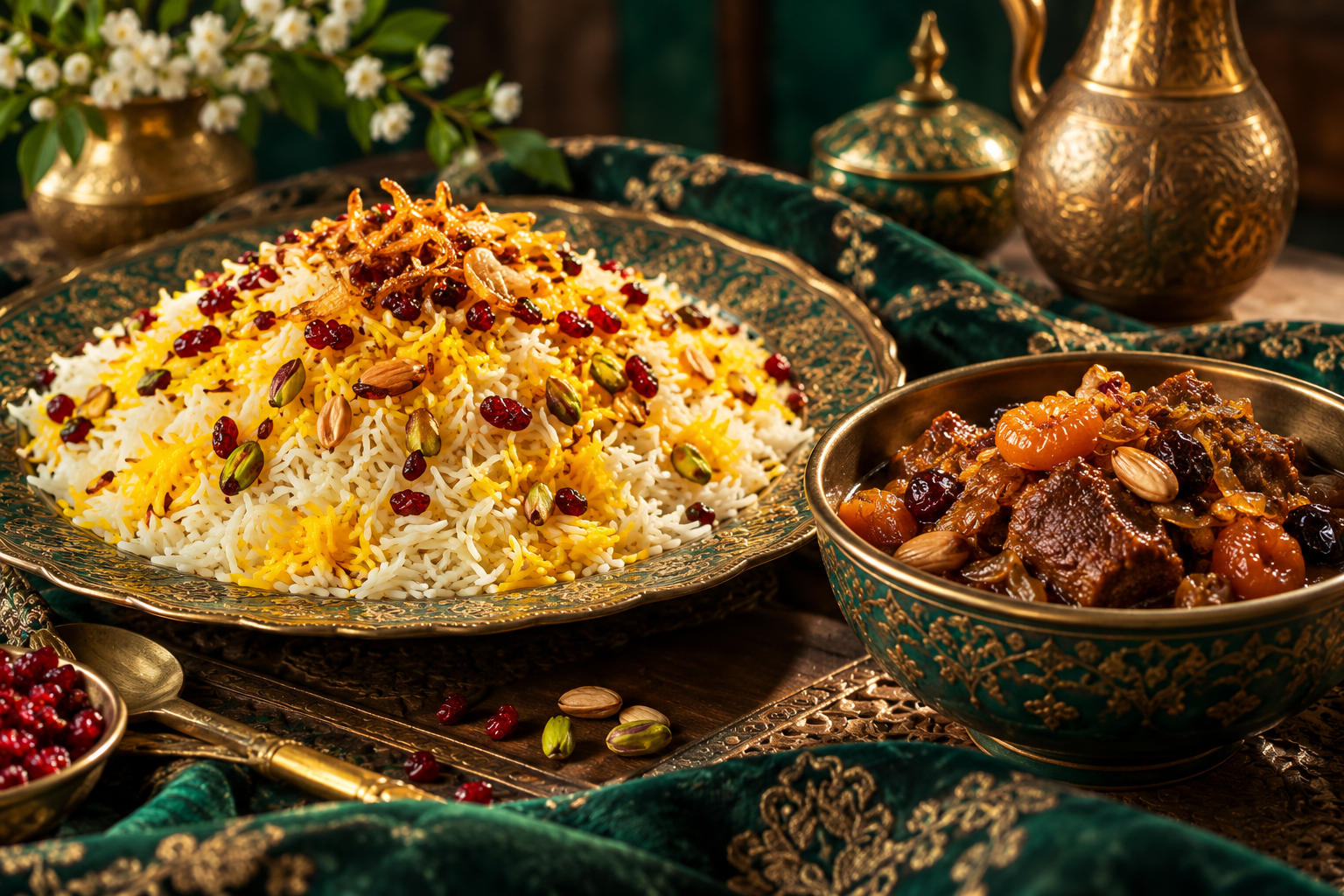
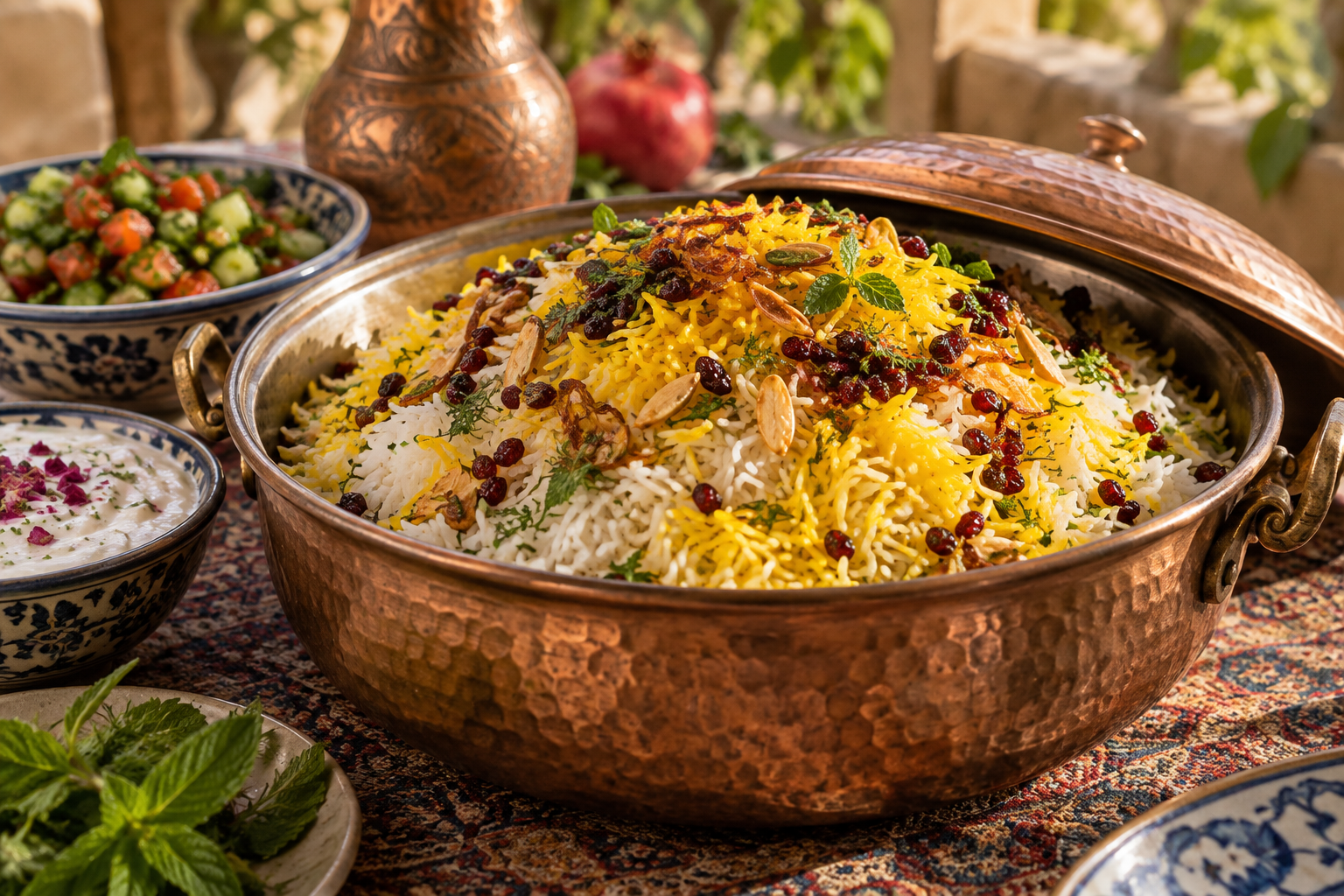
Historical and cultural statements are attributed to the linked sources. The image is an AI-generated editorial interpretation, not a documentary photograph. Practical suggestions are original editorial guidance; any cooking examples are untested drafts.