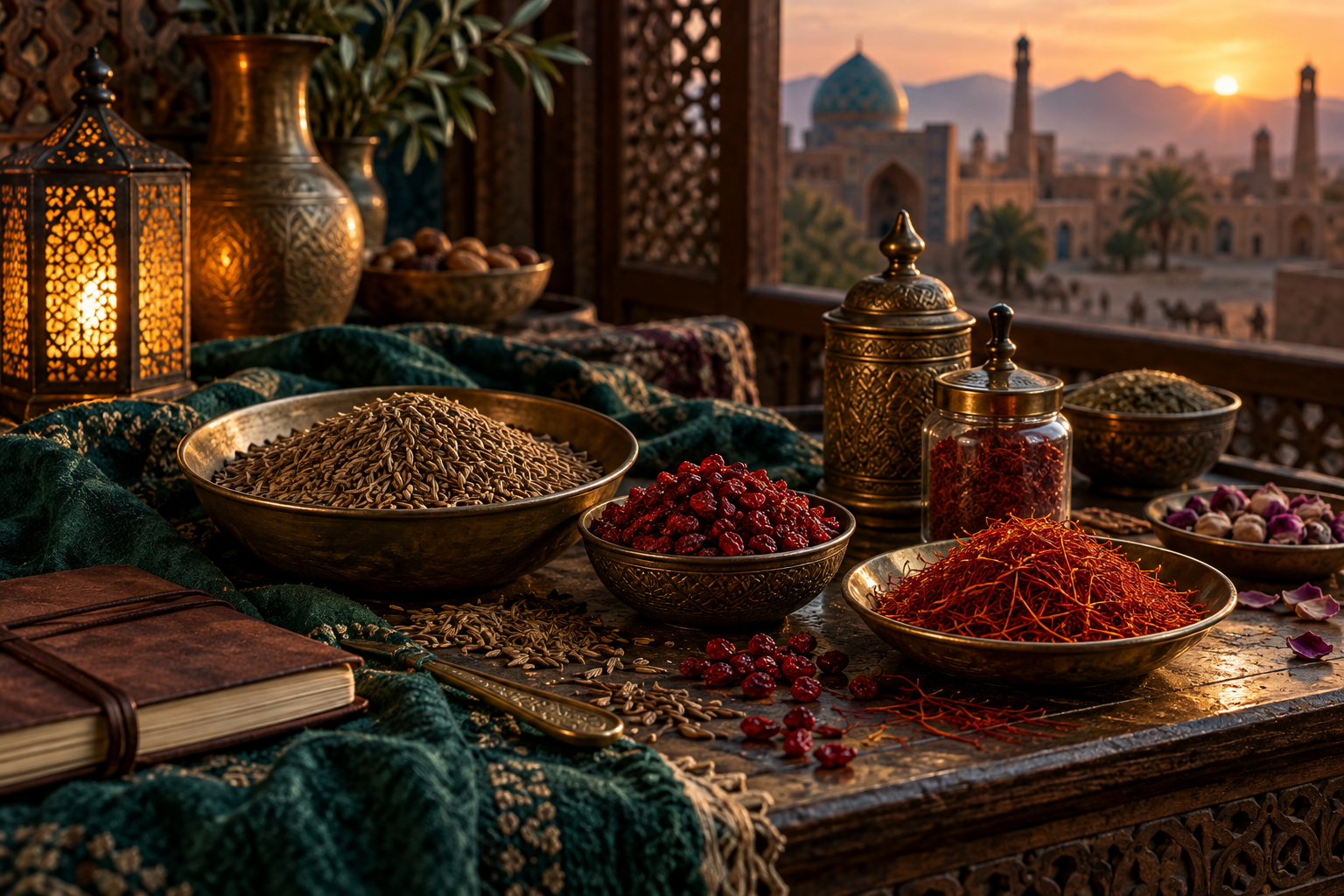
A useful spice collection begins with names and notes, not a long shopping list. Choose a few ingredients from a recipe you want to cook, then record what the label says and how you used each one.
Name the Silk Road spices you buy
Write down the common name, the name printed on the packet and the form you bought: whole, ground or dried. Photograph the label if the names differ between shops. This helps you repeat a successful dish without guessing which jar you used.
Saffron is an example of why precise naming matters. Kew identifies Crocus sativus as saffron and records the culinary spice as its dried stigma. That botanical identification does not establish the quality of an individual packet or prove a home authenticity test. Source: Kew plant-name record.
Compare one change at a time
For cumin, note whether the recipe uses seeds or ground spice. For barberries, record the packet description rather than assuming every dried red berry is interchangeable. For saffron, keep the recipe’s amount and preparation instructions beside the purchase note.
When you adapt a dish, change one variable at a time. Write down the quantity, when it entered the pot and what you would change next time. These are your own tasting observations, not laboratory findings or evidence of health benefits.
Keep the guide within reach
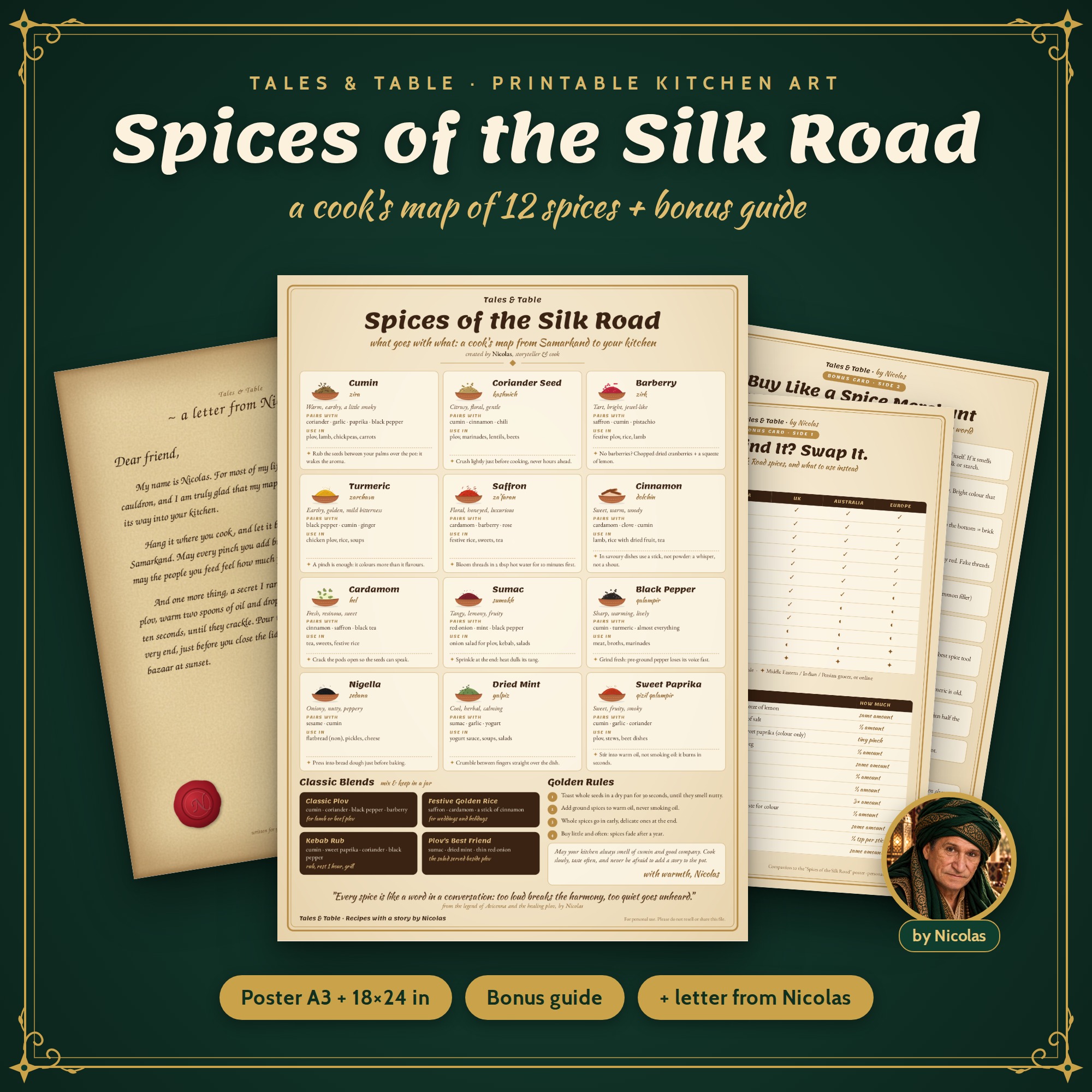
Our Spices of the Silk Road poster introduces twelve spices, classic blends and a bonus ingredient guide. Pair it with a notebook page for each recipe. The poster helps you find a starting point; your notes capture what happened in your kitchen.
You can organise the notebook by dish rather than by ingredient. A plov page might list the rice, meat, carrots and spice combination together. Leave space for the source recipe and a date, so your next attempt begins with useful information.
Buy ingredients for the next recipe you actually plan to cook. A small, well-understood collection is easier to use than a shelf full of unfamiliar jars.
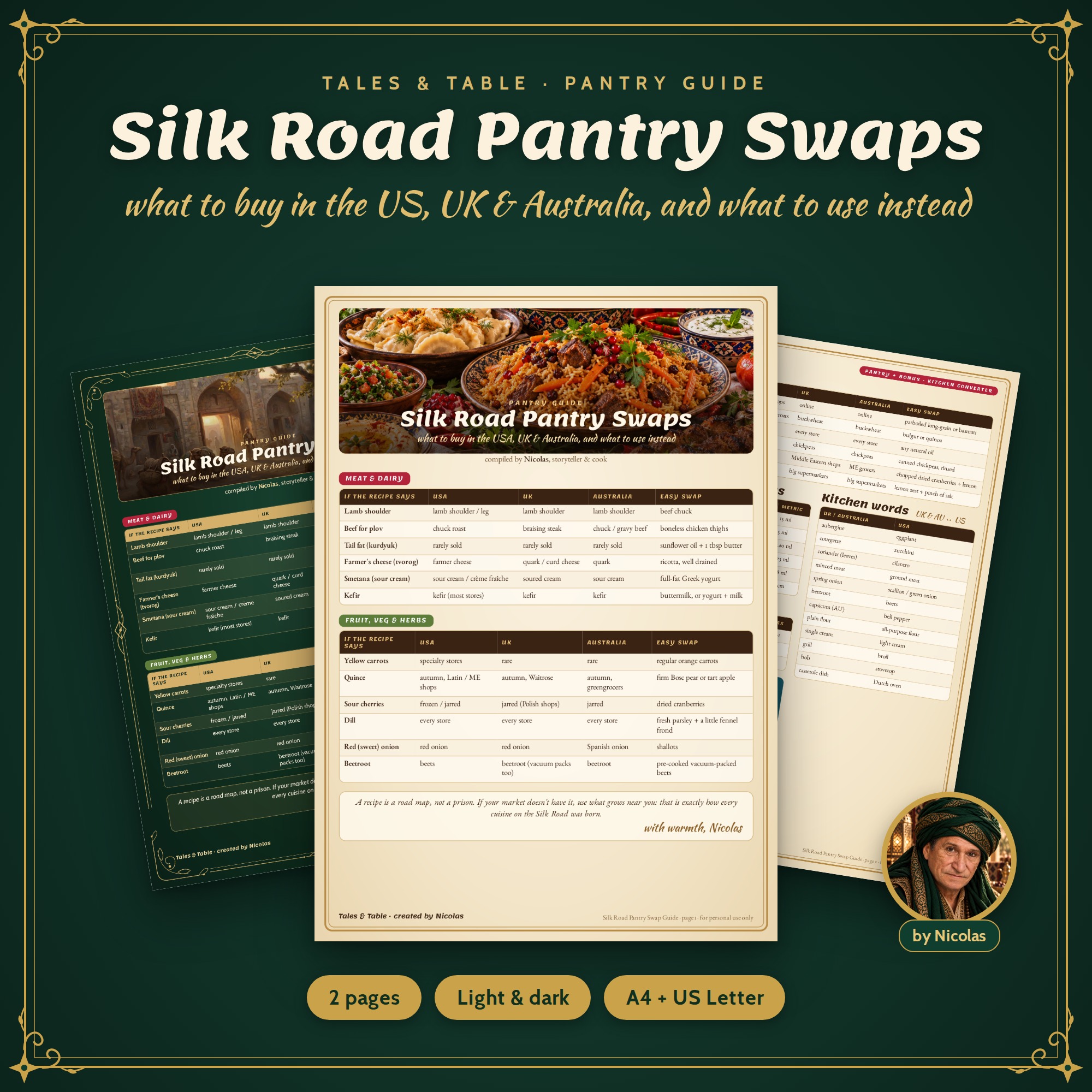
Continue reading: Ingredient swaps for Silk Road recipes: a practical starting point.
Frequently asked questions
Is saffron the same as any yellow spice?
No. This article identifies saffron as Crocus sativus; a colour alone does not identify an ingredient.
Do I need all twelve spices to begin?
No. Start with the ingredients required by a specific recipe.
Sources & editorial notes
Botanical identification is sourced to Kew. Notebook and tasting suggestions are original practical guidance.