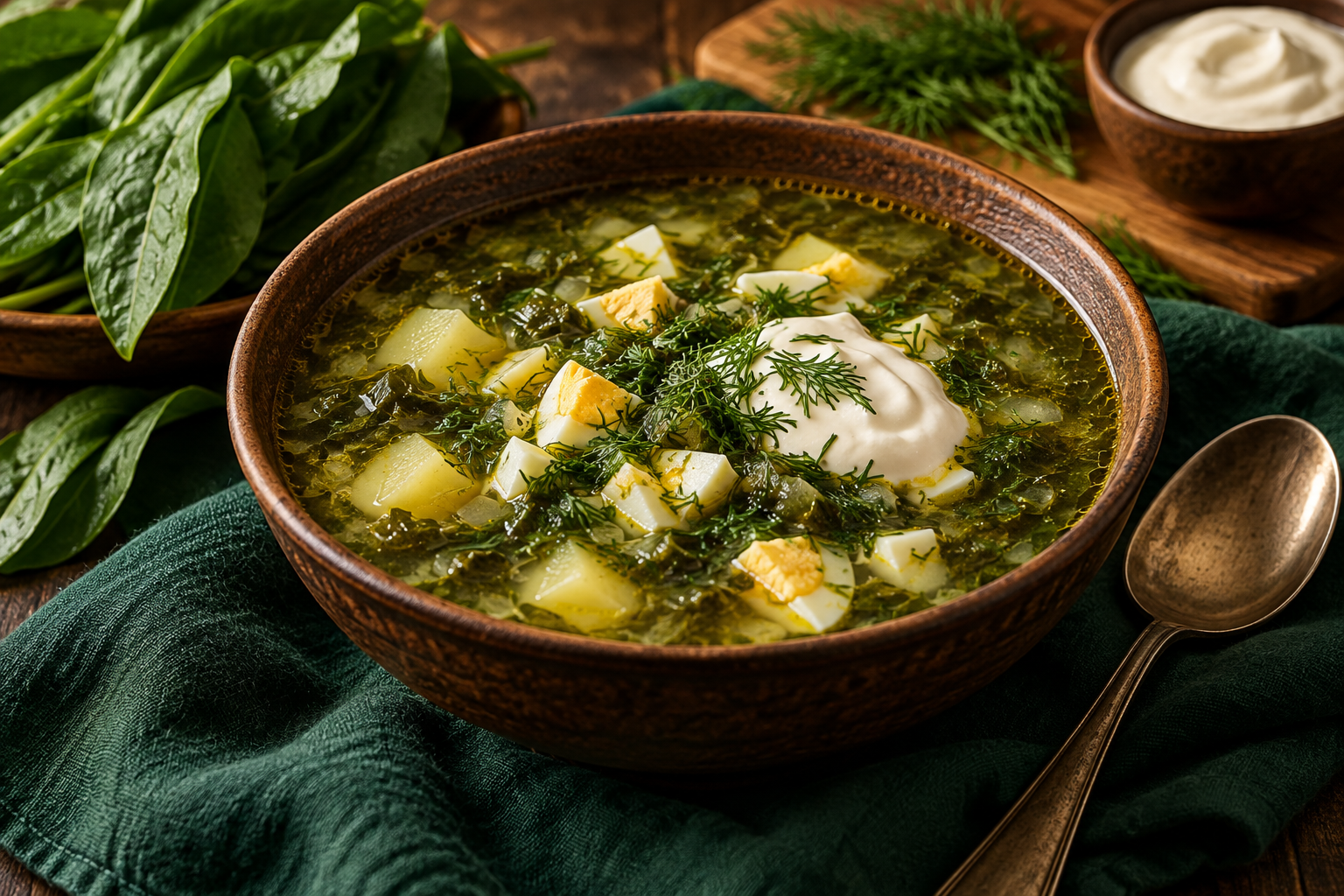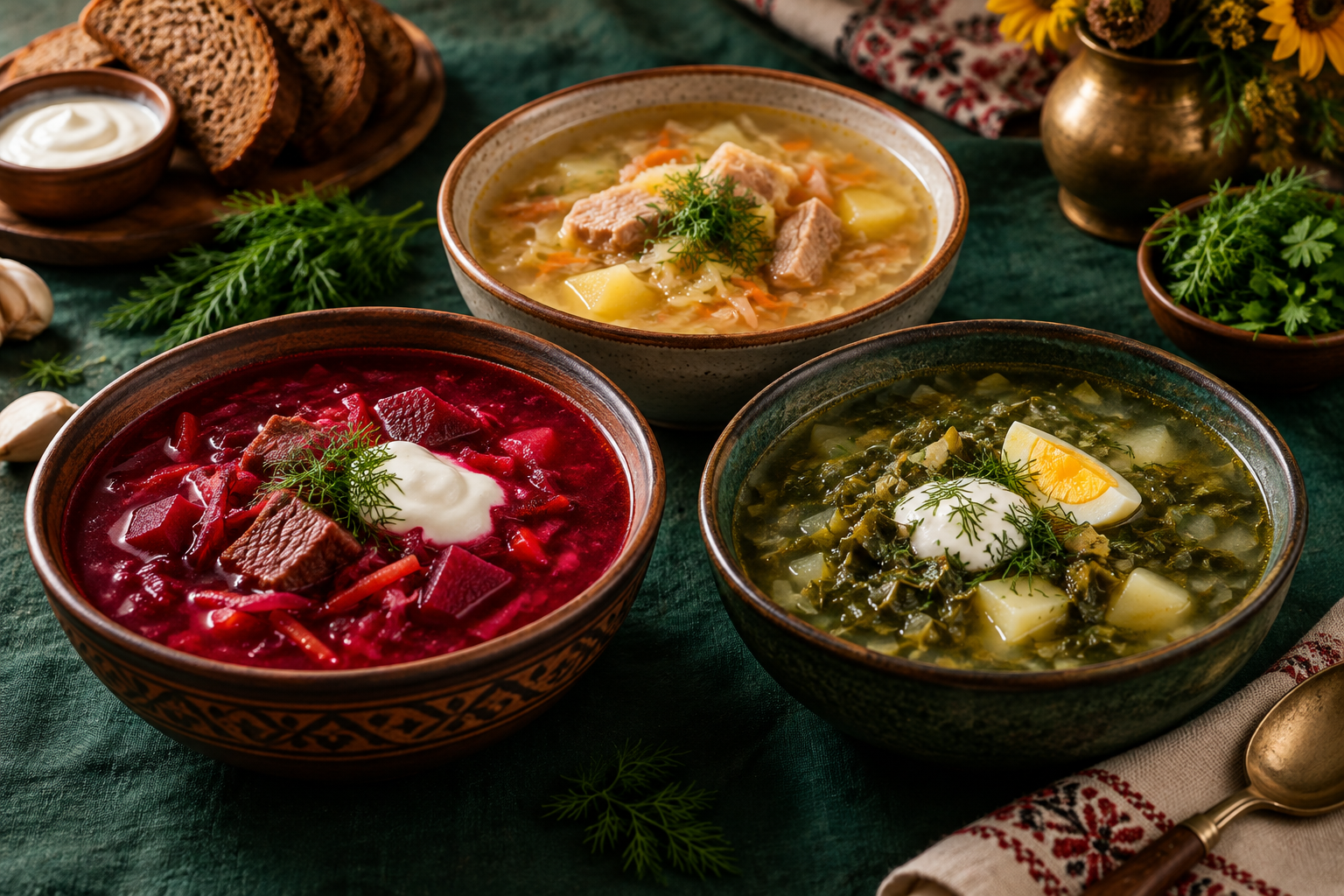
Borshch is a family of soups as much as a single bowl. Beetroot is familiar in many versions, but sourness, broth, vegetables and serving customs can differ from one household or region to another.
What makes Ukrainian borshch distinctive?
UNESCO describes Ukrainian borshch as a traditional dish made with broth and beetroot, sugar beet or fermented beet juice. It records many versions and connects the practice with family transmission, hospitality and shared meals. These details explain why a recipe is part of a living tradition, not a fixed formula.
Beet, broth and a balanced bowl
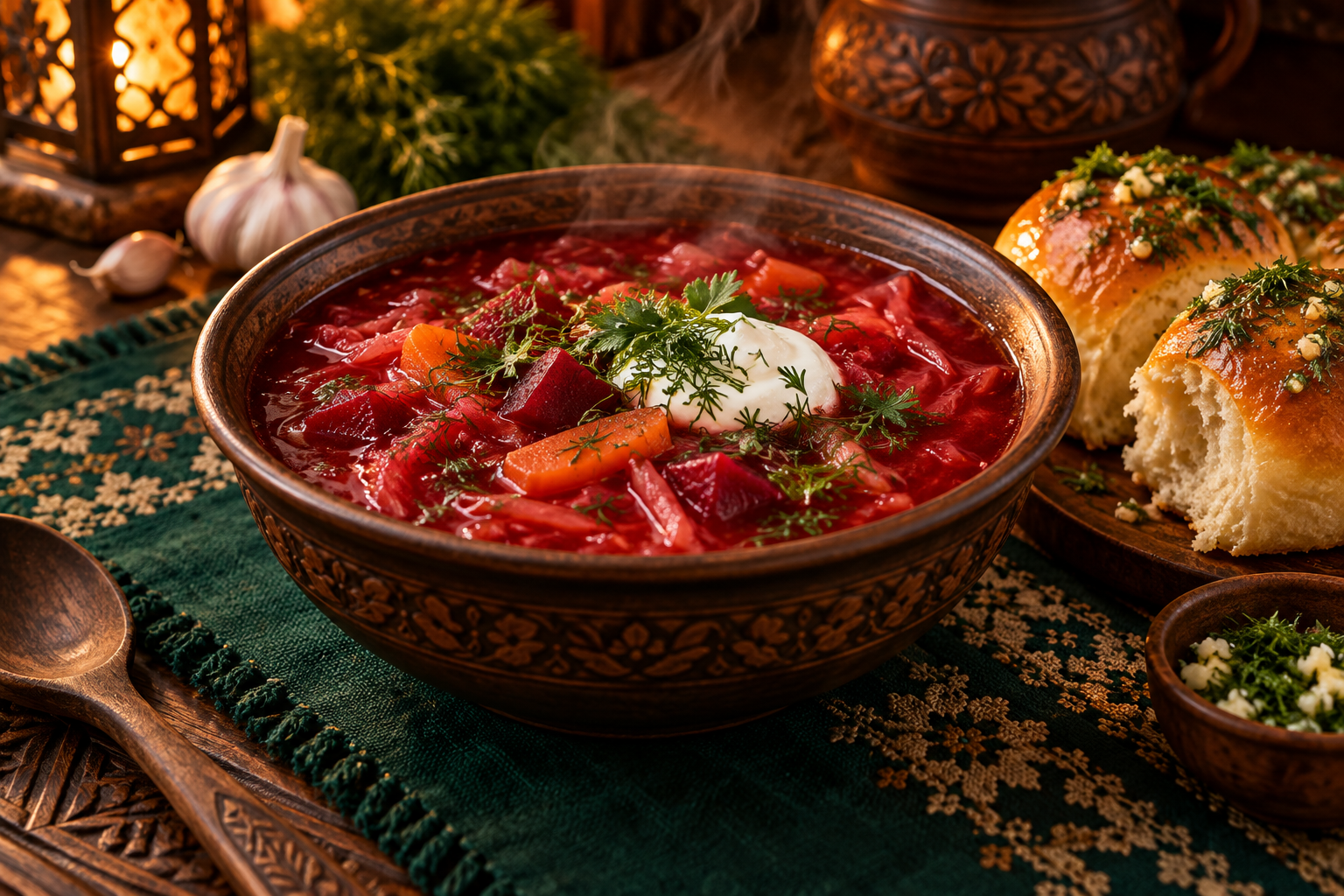
A home recipe may combine beets, cabbage, potatoes, carrots, onion and broth, with the exact list depending on the cook. Some cooks build acidity with fermented beet juice or another sour ingredient. Additions and methods vary; follow a complete recipe rather than mixing steps from several versions.
Pampushky, sour cream and serving
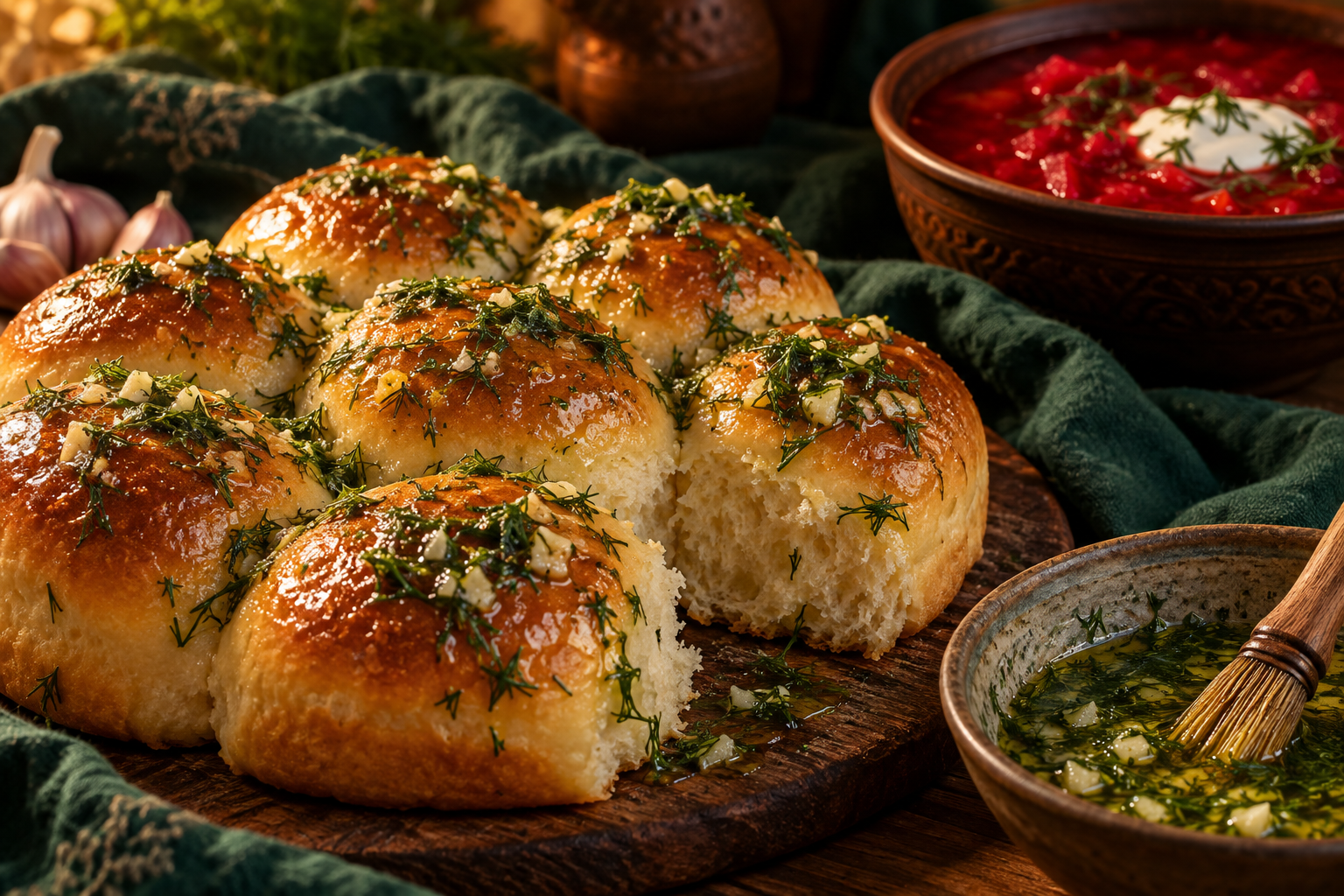
Garlic buns are a familiar accompaniment, while sour cream and fresh herbs may appear at the table. Ask how the recipe is served in the family or region you are learning about. Read about pampushky as a companion bake.
Frequently asked questions
Is Ukrainian borshch always made with beets?
UNESCO’s description names beetroot, sugar beet or fermented beet juice as common components, but recipes vary.
Is there one official borshch recipe?
No single recipe represents every family and region.
Why is borshch cultural heritage?
UNESCO recognises the cooking practice as part of community and family life in Ukraine.
Sources & editorial notes
This article introduces a dish through attributed cultural references and practical editorial guidance. Ukrainian recipes vary by region and household; the suggestions here are not a single official recipe. The accompanying image is an AI-generated editorial illustration, not a documentary photograph.