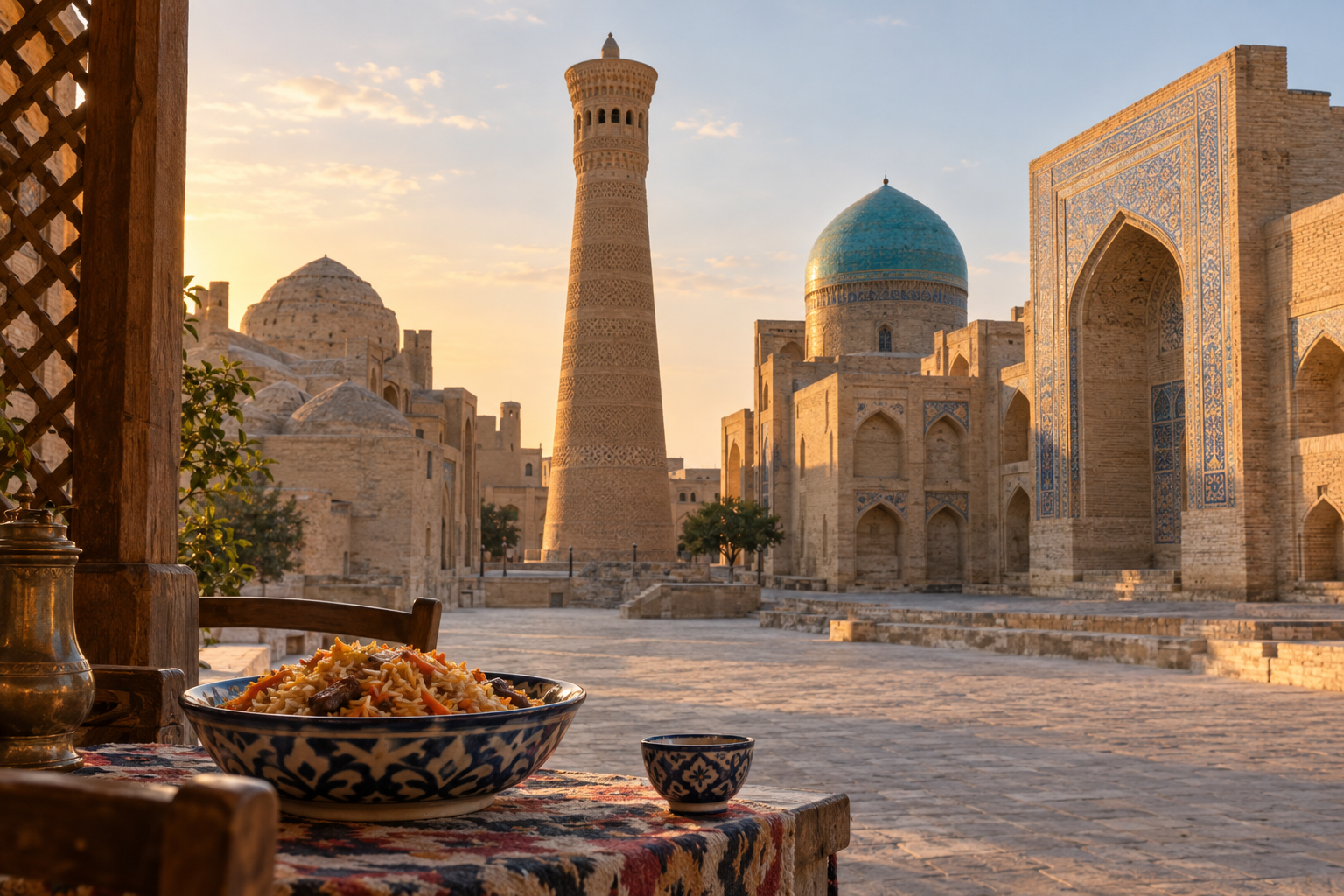
Bukhara invites curiosity about buildings, trade and everyday meals. A thoughtful food story starts with what the historical record actually says.
Why Bukhara matters in Silk Road history
UNESCO describes the Historic Centre of Bukhara as more than two thousand years old and situated on the Silk Roads. It records the city’s long role as a centre of Islamic culture. This is a strong starting point for place and period, but the inscription does not prescribe a plov recipe.
Before connecting a modern dish to a monument, ask for a source that documents that particular connection. A photograph of a market or a plate can introduce a question; it cannot answer it alone.
Look for named cooks and dishes
When reading a local menu or recipe, record the cook, date and exact dish name. Compare how the grain and accompaniments are prepared. Avoid treating one restaurant’s version as a timeless account of an entire city.
The Silk Roads were networks of exchange, not a single route carrying one unchanged recipe. Trade context helps frame research, while recipe evidence must come from the people and texts that describe the food.
Make a small study at home
Pair one credible history of Bukhara with one clearly credited recipe. Note which claims come from each source. Cook the recipe on its own terms and describe the result as your attempt. Our broader Silk Roads guide explains why a neat migration legend is rarely enough.
Frequently asked questions
Is Bukhara on the Silk Roads?
Yes. UNESCO identifies its historic centre as situated on the Silk Roads.
Does UNESCO name one Bukhara plov recipe?
No. The World Heritage entry describes the city, not a standard recipe.
Can a modern meal reveal ancient ingredients?
No. You need dated evidence for a historical ingredient claim.
How should I research local food?
Start with a named cook, recipe or food historian, and keep place and date attached.
Sources & editorial notes
Historical and cultural statements are attributed to the linked sources. The image is an AI-generated editorial interpretation, not a documentary photograph. Practical suggestions are original editorial guidance; any cooking examples are untested drafts.