Samarkand is a useful starting point for exploring the Silk Road because its history cannot be reduced to a single building, dynasty or dish. Begin with the place, then follow your curiosity into its architecture, crafts and food.
Why Samarkand matters on the Silk Roads
UNESCO recognises Samarkand as a meeting place of cultures. Its World Heritage description traces ancient Afrasiab and highlights the city’s development during the fourteenth and fifteenth centuries. The Registan, Bibi-Khanum, Shah-i-Zinda, Gur-e Amir and Ulugh Beg’s Observatory are among the major monuments. These are historical reference points, rather than a complete itinerary. Source: UNESCO World Heritage Centre.
Three questions to guide your reading
When you explore a photograph or a guidebook, ask what the building was used for, which period it belongs to and who maintains it today. Those questions make a familiar image of blue domes more meaningful. A decorative detail can become a starting point for learning about the people who made it.
Keep architecture and food history distinct. A city’s place on a trading network does not prove that every ingredient in a modern recipe followed a particular route. If a source does not establish that connection, enjoy the flavour without attaching an invented origin story.
Bring the inspiration home thoughtfully
Choose one practical project: read about a monument, cook a dish from a named recipe or learn the names of a few ingredients. You do not need to recreate an entire culture in one evening. A table inspired by Samarkand can simply be an invitation to learn more.
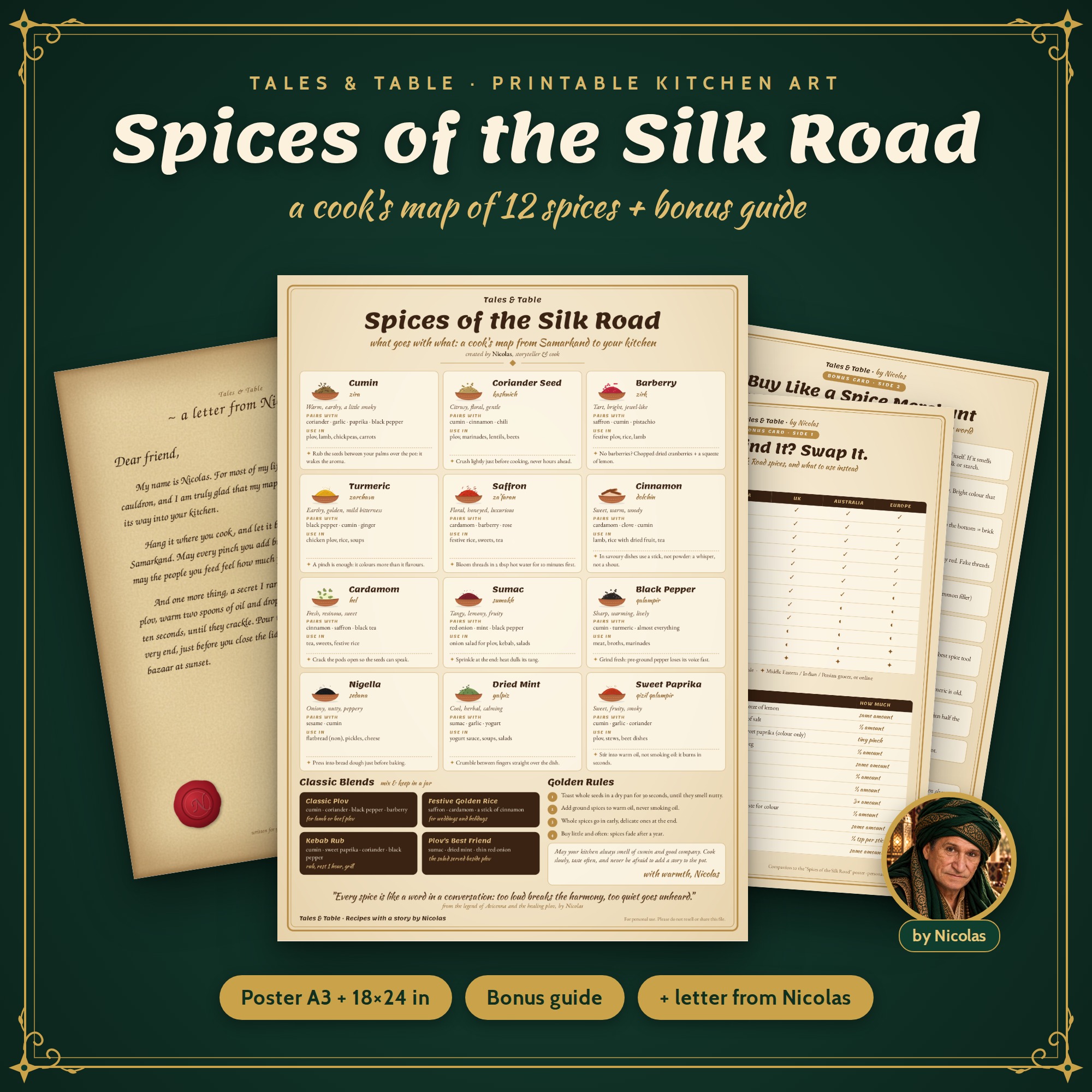
Our Spices of the Silk Road printable guide is a kitchen companion, not a substitute for historical research. Use it to organise ingredient notes while keeping your cultural reading in a separate notebook.
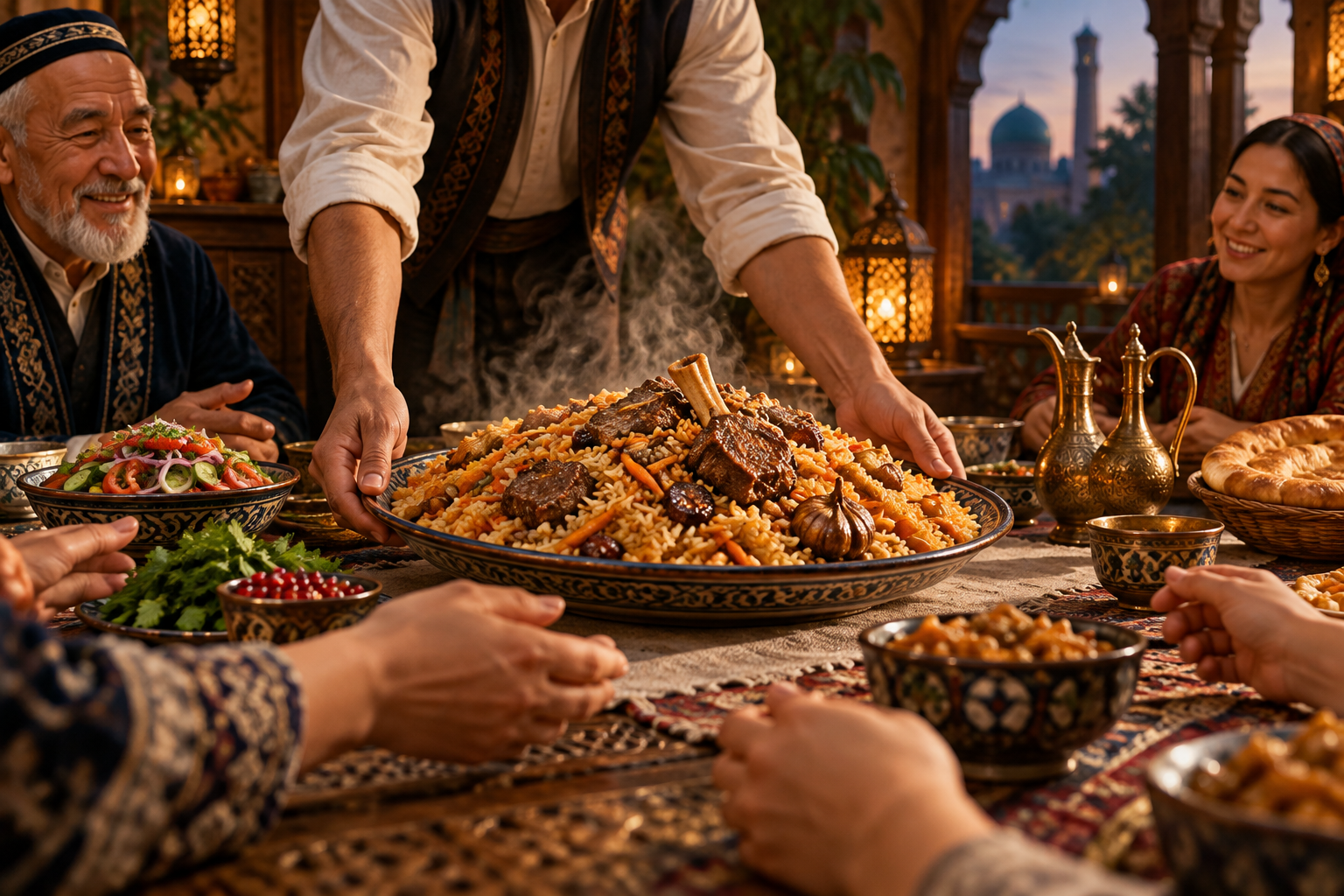
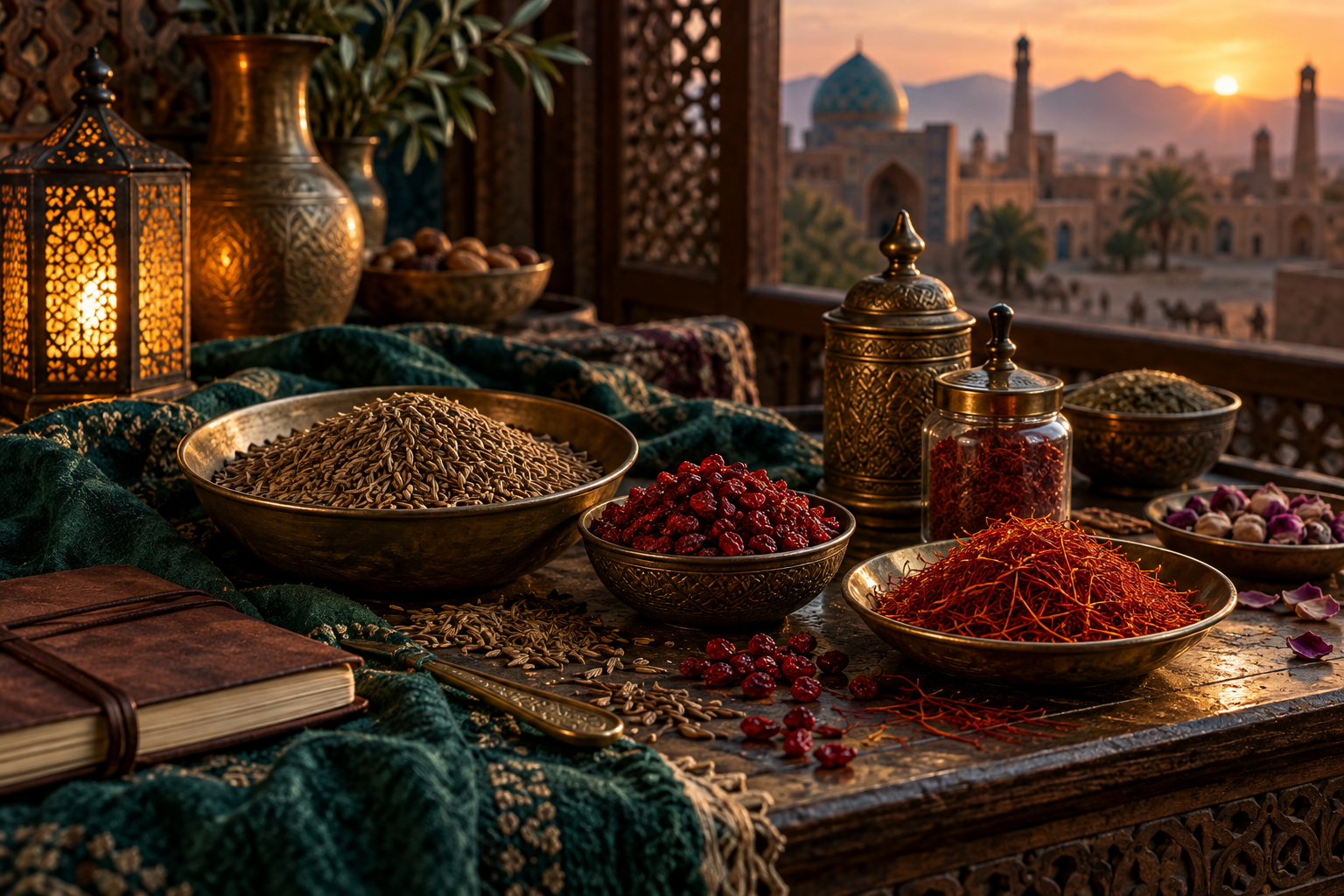
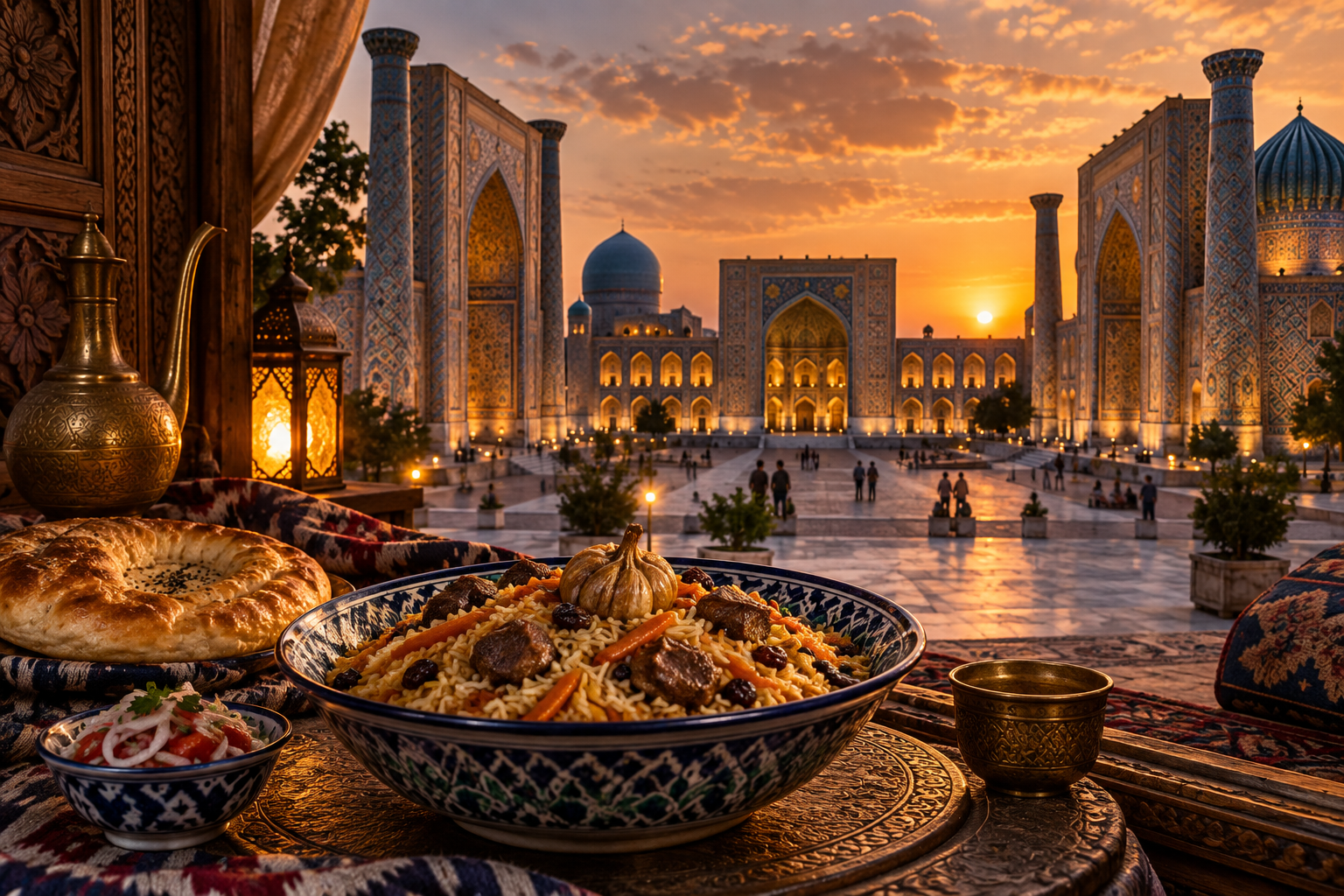
The illustration on this page is an imagined editorial scene. It should not be used as a precise architectural record or a travel-planning map.
Continue reading: Why Uzbek palov is more than a rice dish.
Frequently asked questions
Is the image a documentary photograph?
No. It is a generated illustration inspired by Silk Road architecture.
Where should I start researching Samarkand?
Start with the UNESCO World Heritage entry linked below, then explore specialist histories and current local visitor information.
Sources & editorial notes
Historical statements are drawn from the linked UNESCO entry. The reading suggestions are original editorial guidance.