A recipe tells you what goes into the pot. Cultural context helps explain why people gather around it. Palov deserves both kinds of attention: the practical work of cooking and the social meaning of sharing.
Palov as living Uzbek heritage
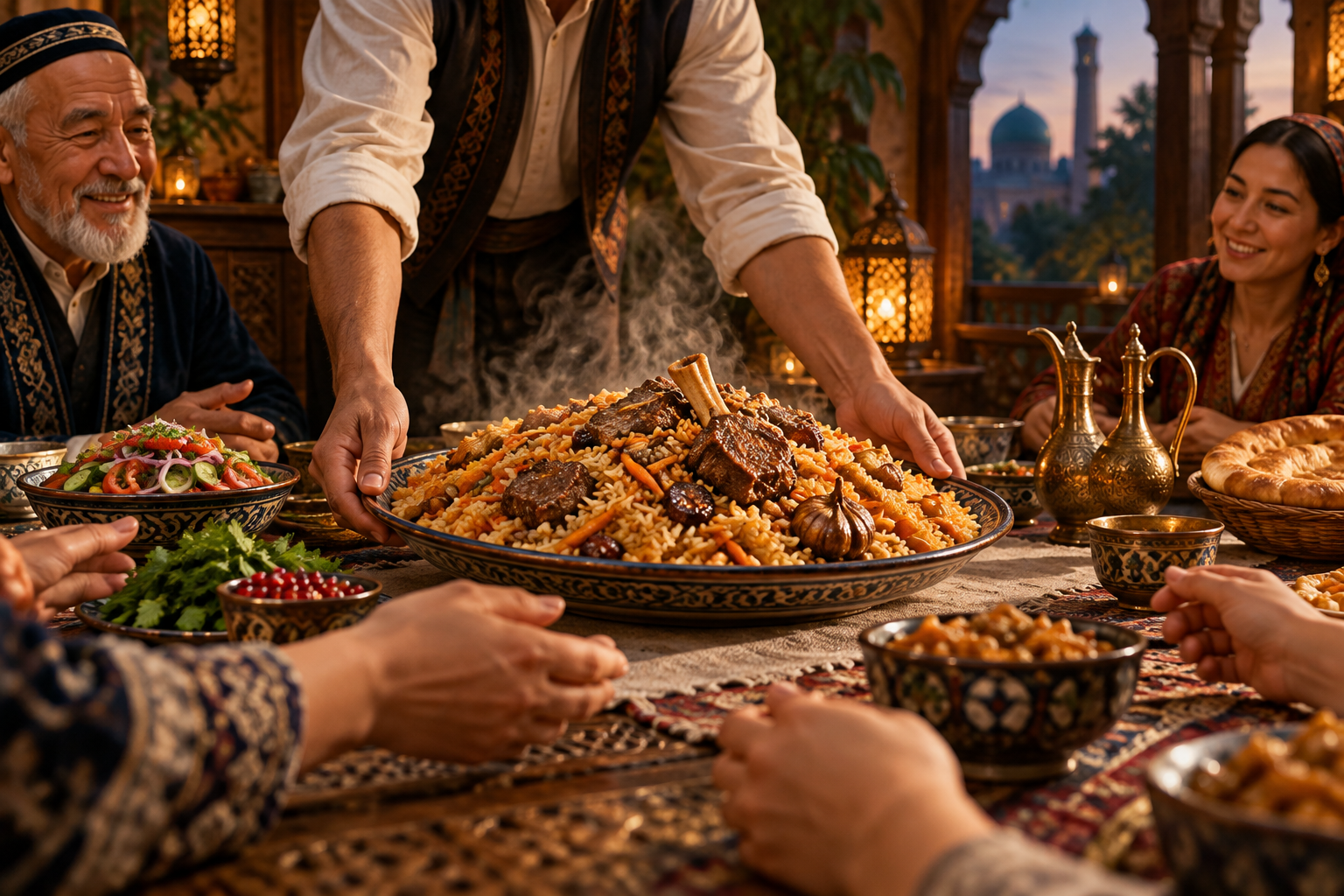
Uzbekistan’s palov culture and tradition joined UNESCO’s Representative List of Intangible Cultural Heritage in 2016. UNESCO describes a dish prepared and shared in rural and urban communities, both as an everyday meal and for occasions including weddings. Hospitality and the passing of knowledge between generations are central to the entry. Cooking skills are learned through demonstration, participation and other teaching settings. Source: UNESCO.
Leave room for different family practices
A short article cannot speak for every household. Ask which cook, family or community a recipe represents rather than calling one version the only authentic plov. If someone shares their method, record their name and the details they consider important.
That approach is useful in your own kitchen too. Write down what your family changes and why. A different pot, rice variety or occasion may lead to a different decision. Make the change visible instead of presenting it as a universal traditional rule.
Host a gathering with care
Our suggestion is simple: ask about dietary needs, choose a manageable recipe and give yourself time to sit with your guests. Invite conversation without insisting that everyone perform a ritual or share a personal memory.
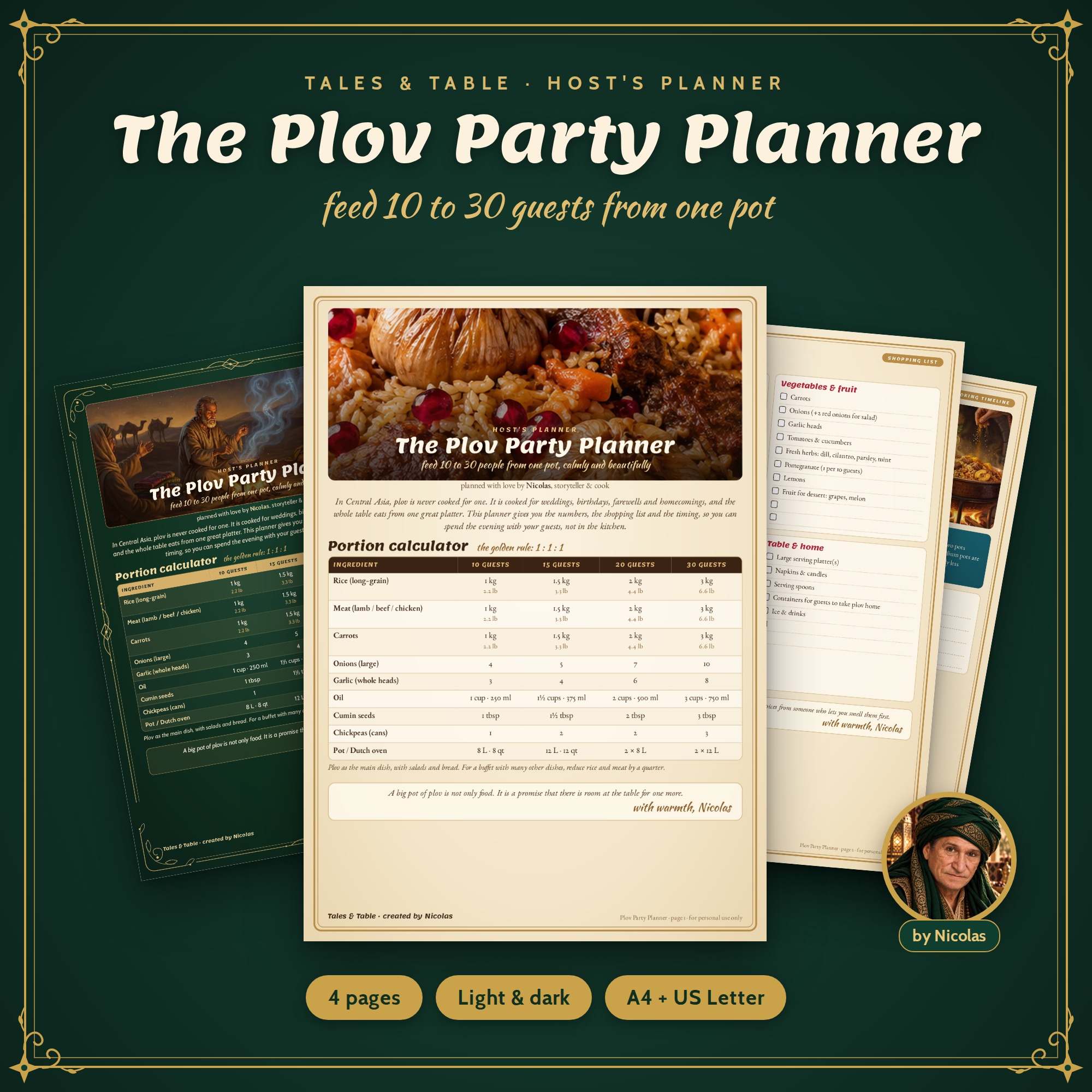
If you introduce a table activity of your own, describe it as your idea. A round of family memories can be lovely, but it should not be labelled an ancient Uzbek custom without evidence. The Plov Party Planner combines practical preparation with optional ideas for your gathering.
The aim is a welcoming meal, not a staged claim to cultural expertise. Let curiosity continue after dinner through reliable reading and conversations with people who know the tradition directly.
Continue reading: Samarkand and the Silk Road: a beginner’s cultural guide.
Frequently asked questions
When did UNESCO recognise palov culture?
The tradition was inscribed in 2016.
Does UNESCO provide one official recipe?
The linked entry describes the cultural practice; it is not a single compulsory recipe.
Sources & editorial notes
The heritage summary is sourced to UNESCO. Hosting suggestions are original advice, not claims about historical rituals.