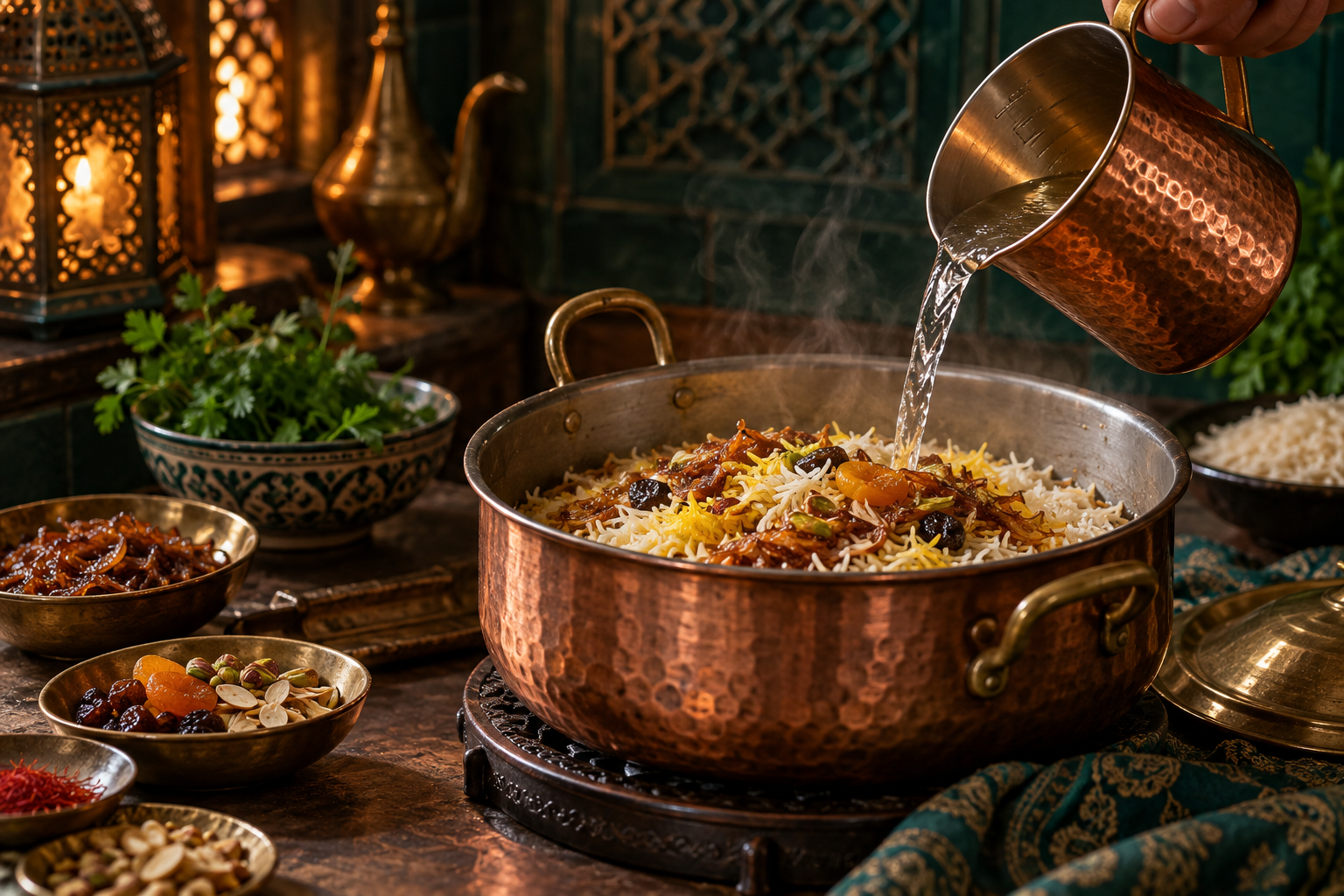
There is no helpful universal finger-width rule for every pot. Water in plov includes the liquid already in the base as well as what you add when the rice enters.
Why a plov water ratio depends on the pot
Read whether the liquid quantity describes stock added at the start, water added after simmering, or the total for the dish. Those are different instructions. Keep a measuring jug nearby rather than relying on a vague memory of the level.
Also note whether the rice is soaked and drained. The liquid instruction belongs to that preparation method. Switching to unsoaked rice while retaining every other instruction may change the outcome.
Understand your cooking vessel
A shallow, wide vessel and a tall saucepan expose different surfaces during an uncovered stage. Record your pot’s approximate width and use the same vessel while learning one recipe. This gives your observations a stable reference point.
At the transition to covered cooking, look at the rice and the liquid as the method directs. Do not add a large amount because the surface looks different from a photograph taken in another pot.
Make the next pot easier
Write down the measured additions, the length of the uncovered stage and the finished texture. Adjust cautiously on a later batch. Follow a complete recipe first; develop your own liquid rule only after repeated results with your equipment.
Continue reading: Best rice for plov: choose by method, not a single label.
Frequently asked questions
Is plain-rice liquid guidance a complete plov formula?
No. Plov includes a seasoned base and ingredients that alter the cooking context.
Should I measure water?
Yes. A measurable record makes your chosen method easier to repeat.
How much water should I add to plov?
Follow a complete recipe for your rice and pot, accounting for liquid already in the base. Record measured additions. A universal finger-height instruction cannot describe every vessel, preparation or simmering stage with equal reliability.
What is the rice-to-water ratio for pilaf?
Plain-rice and mixed-dish instructions describe different cooking contexts. For plov, identify whether a recipe gives total liquid or a later addition. Keep that quantity tied to its grain, preparation and equipment rather than copying one isolated number.
Does soaked rice need the same liquid as dry rice?
Use the instructions written for the preparation you chose. Do not remove soaking but retain every other step without considering the effect. A careful cooking record makes a later adjustment more informative than a large unmeasured splash.
Why does my plov need different water in a new pot?
The vessel and heating setup change the cooking context. Record width, batch and uncovered-stage timing. Return to a compatible complete method before deciding that the rice itself is the only cause of a changed result.
Sources & editorial notes
Original Tales & Table editorial guidance. Linked sources support the cultural, rice or safety points identified in the text. Recipe ideas are original kitchen drafts and have not been tested by our kitchen.