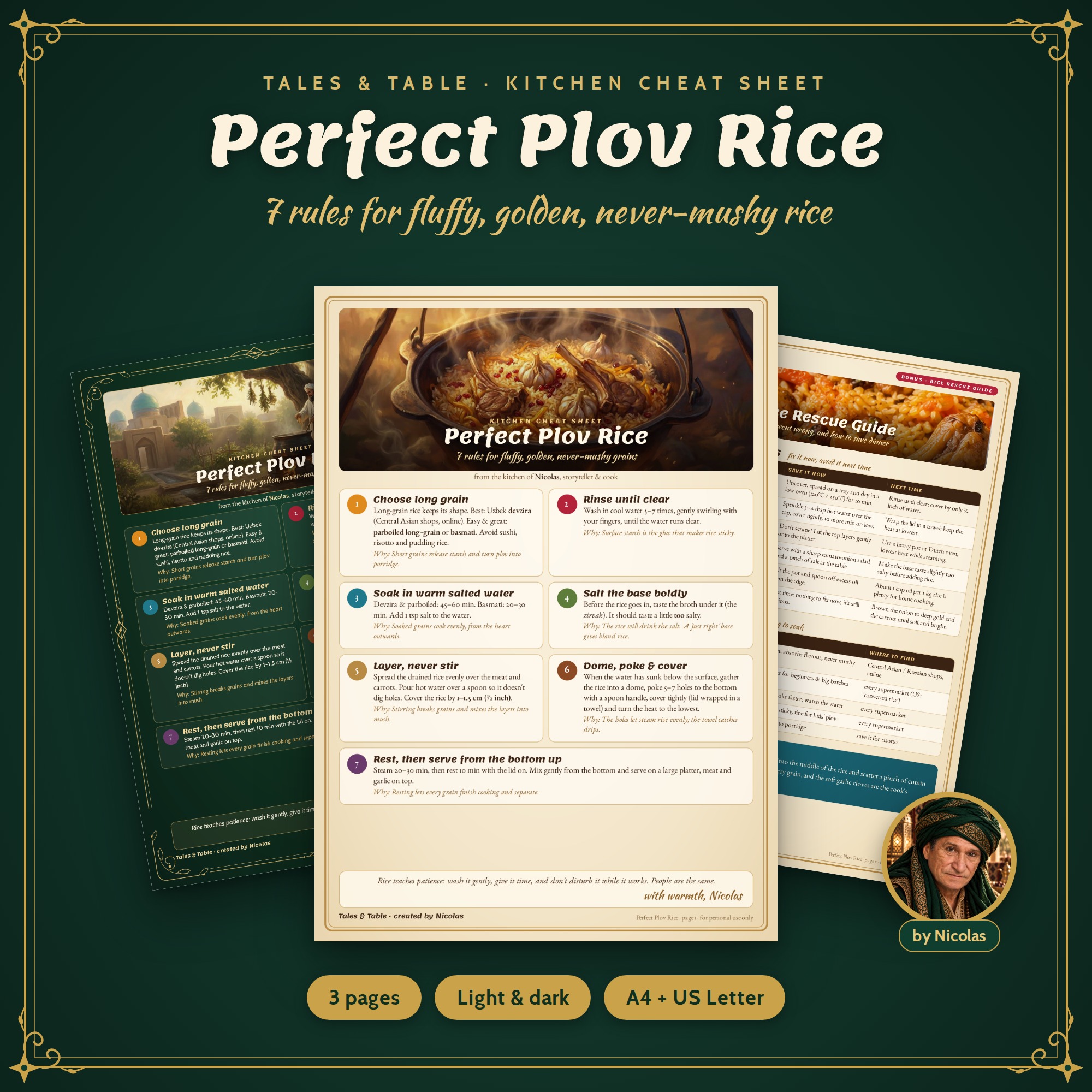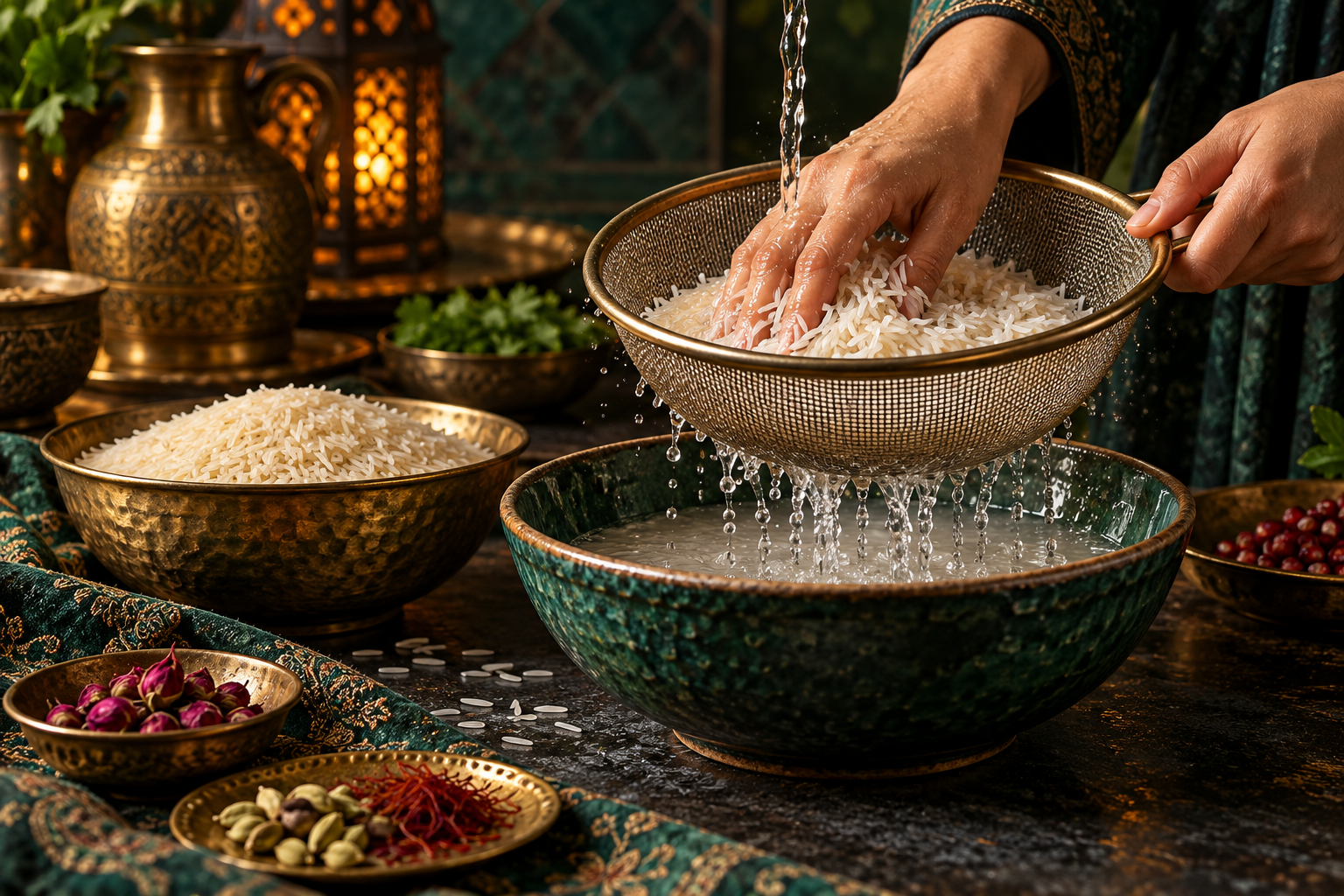
Rinsing and soaking are different actions. One passes water over the grains; the other holds them in water before cooking. Your recipe must explain whether it expects either step.
When to rinse or soak rice for plov
USA Rice cautions that rinsing enriched U.S. white rice can remove added water-soluble nutrients. That is why “always rinse every rice” is too broad. Read what your particular product says before starting.
Then read the recipe. If its method includes soaked rice, note the soak time and how the grains should be drained. A recipe written for drained, soaked rice may not behave the same way with unprepared grains.
Be consistent about draining
Use a suitable strainer and give prepared rice the drainage time specified in the recipe. Do not casually pour the soaking water into the pot unless the method tells you to. That extra liquid becomes part of the cooking system.
Measure the dry rice before preparing it. Keep the dry weight and preparation notes together so that the next batch can be repeated. Measuring a wet bowl of rice is a different reference point.
Change one variable
If your first pot is too soft, do not change rinsing, soak time, grain type and liquid all at once. Pick the most plausible variable and record the result. A kitchen notebook makes improvement possible instead of leaving you with a string of guesses.
Continue reading: Best rice for plov: choose by method, not a single label.
Frequently asked questions
Is rinsing mandatory for all rice?
No. Product instructions and enrichment matter.
Does soaking replace cooking?
No. Follow the complete recipe, including its liquid and cooking stages.
Should I wash rice before making plov?
Check the product’s directions and the recipe together. Rinsing is not a universal requirement for every packet, particularly when enrichment is relevant. A method that expects rinsed or soaked grains must be read in that preparation context.
How long should I soak rice for plov?
Use the duration in your selected recipe rather than guessing from another grain or dish. Measure the dry rice first and keep the preparation note with its liquid instruction. The soaking step belongs to a complete method.
Should I drain soaked rice before cooking?
Follow the recipe’s instruction for draining and its specified preparation. Unplanned soaking water becomes extra liquid if it enters the pot. Keep the strainer and measured additions organised so you know what the cooking system contains.
Can I skip soaking and keep the same water amount?
Do not assume an unchanged result. If the recipe relies on soaked rice, use a compatible no-soak method or treat the omission as a controlled experiment. Record the texture rather than silently changing several steps.
Should I rinse or soak rice for plov?
Check the rice packet and the complete recipe; no one instruction suits every product.
Sources & editorial notes
Original Tales & Table editorial guidance. Linked sources support the cultural, rice or safety points identified in the text. Recipe ideas are original kitchen drafts and have not been tested by our kitchen.