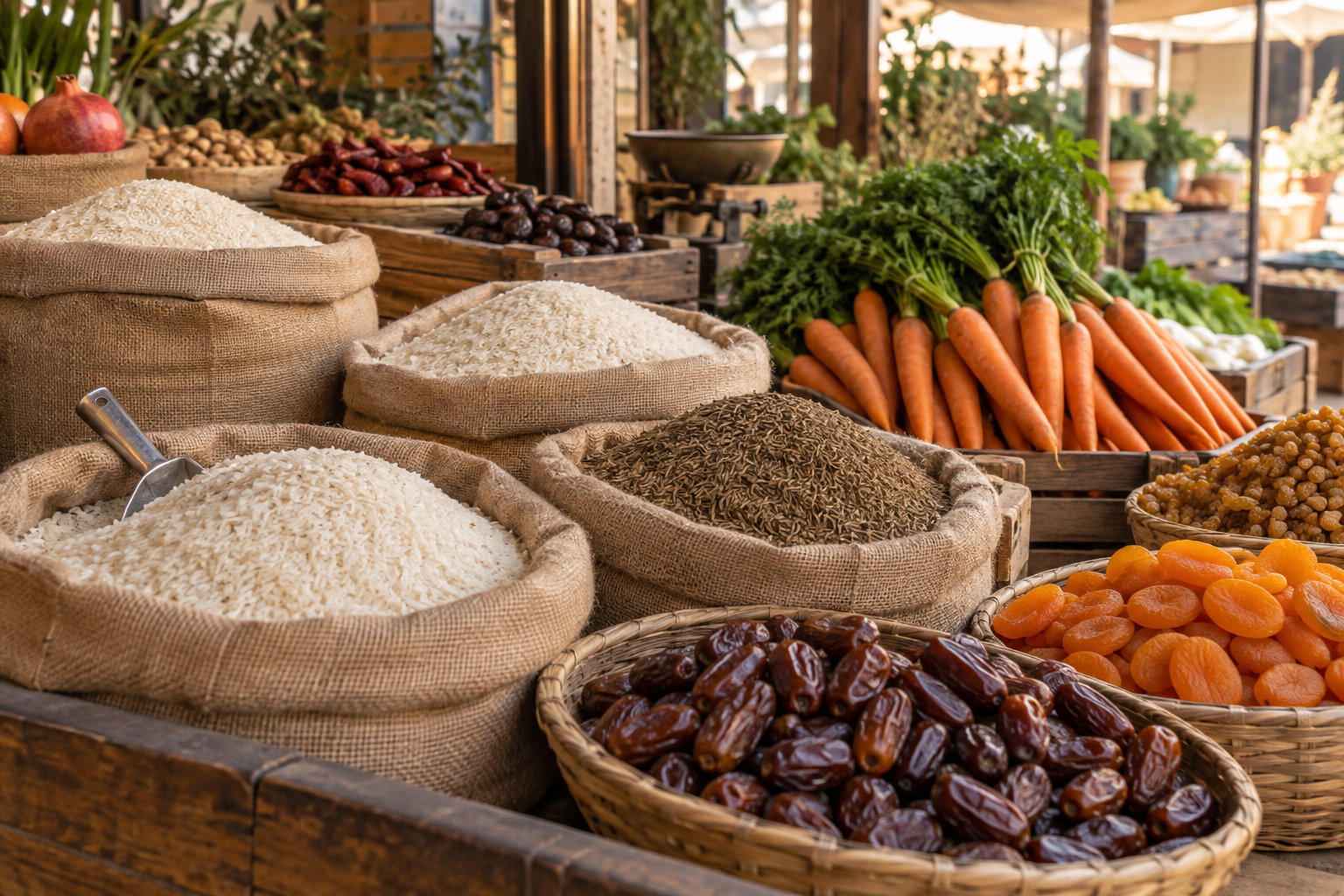
A market photograph invites a story about movement. The more useful question is which movement a source can actually document.
Silk Road market ingredients in networks of exchange
UNESCO describes the Silk Roads as routes of trade and cultural exchange rather than one road. Its educational material discusses the movement of foods, agricultural produce and knowledge. This supports a broad exchange framework, not a claim that a particular modern plov ingredient came by one precise caravan.
Historical dates, names and routes matter. A modern stall shows current availability; it cannot establish what was sold there centuries ago.
Build an evidence trail
For an ingredient, record the botanical or common name, the place and the earliest evidence a historian cites. Keep trade evidence separate from recipes, which may be much later. A spice’s presence in one region does not prove it was used in every local rice dish.
When a source uses a broad word such as “spices,” resist filling in a familiar shopping list. Look for the original text or a specialist study.
Bring the method into your kitchen
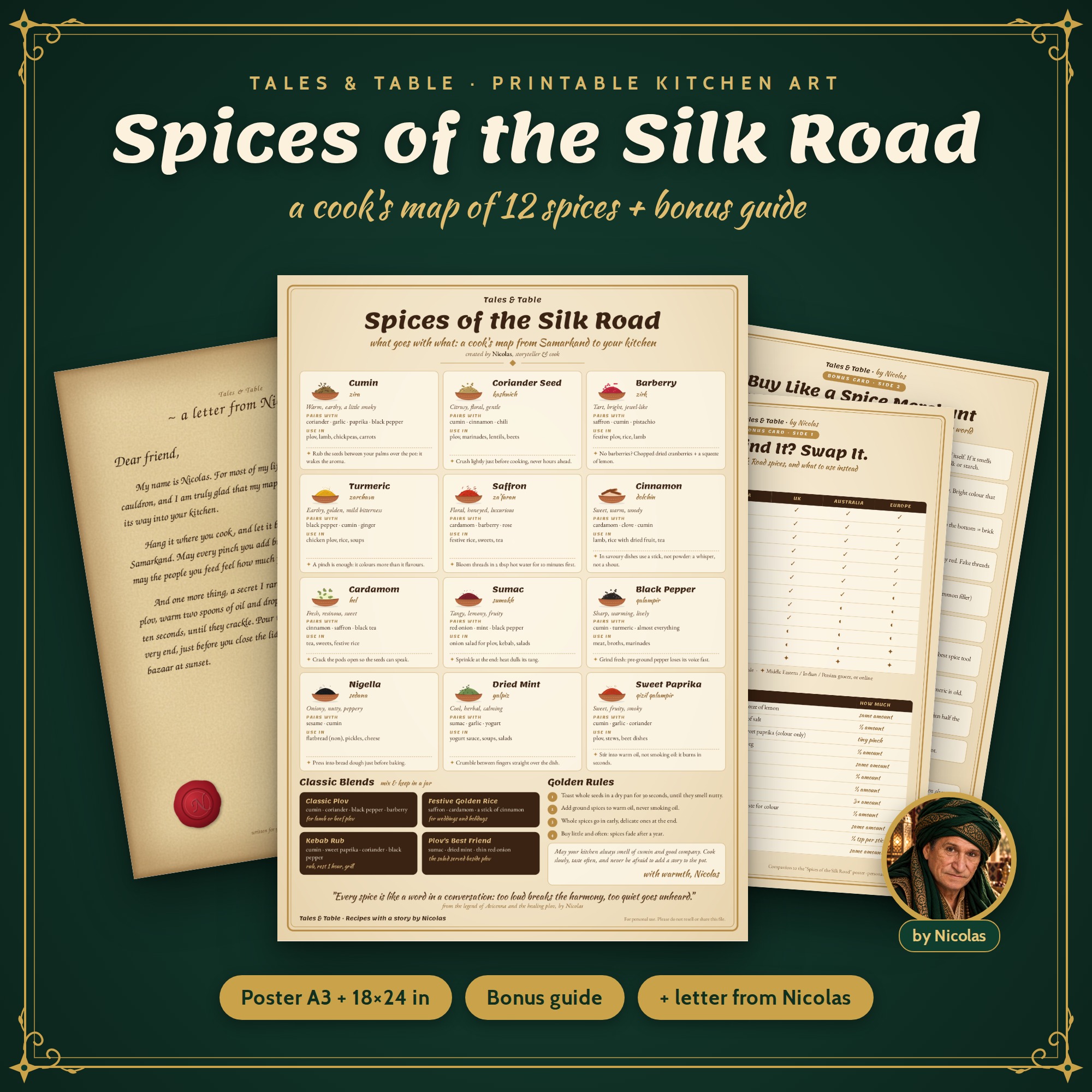
Choose a recipe because its ingredients appeal to you, then identify where its history is documented. Our spice notebook guide helps organise labels and recipe notes without turning guesswork into heritage.
Frequently asked questions
Was there only one Silk Road?
No. UNESCO describes networks of routes and exchange.
Did one caravan invent plov?
No such claim follows from the broad exchange record.
Can a market photo date a recipe?
No. It documents a contemporary scene at most.
What should I record for an ingredient?
Name, place, date and the source for each historical claim.
Were plov ingredients traded on one Silk Road?
UNESCO describes networks of exchange. A specific ingredient route needs its own dated evidence.
Sources & editorial notes
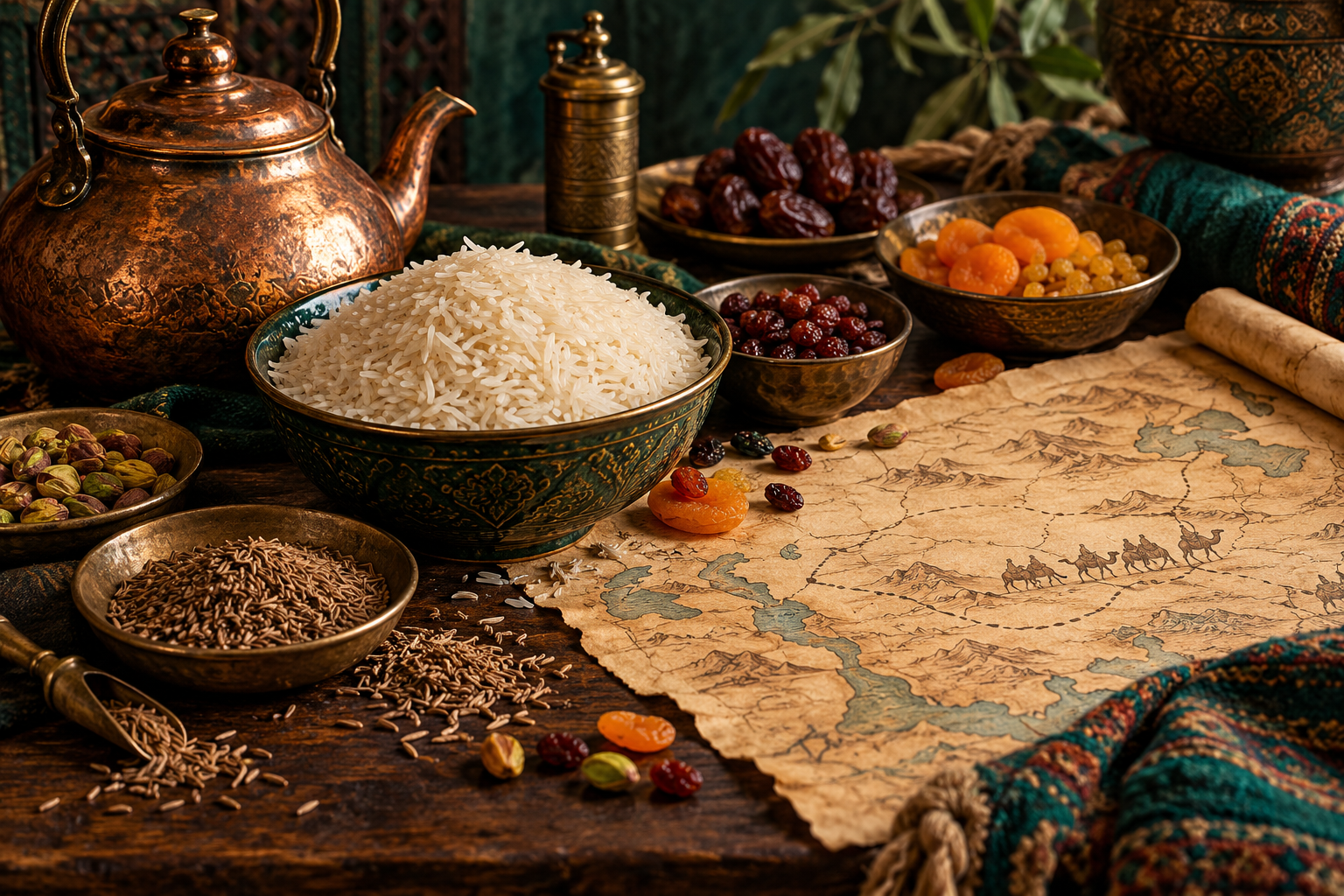
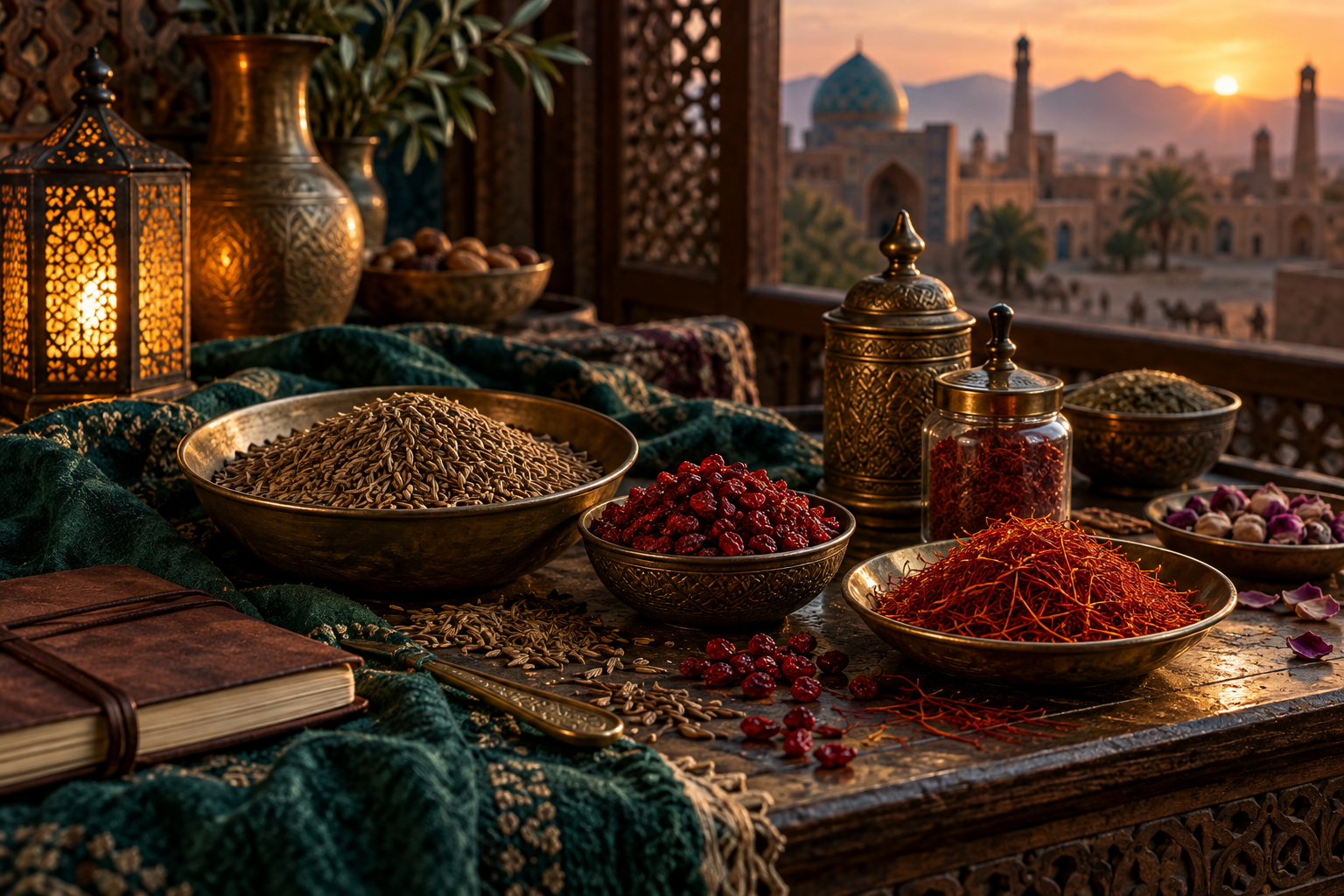
Historical and cultural statements are attributed to the linked sources. The image is an AI-generated editorial interpretation, not a documentary photograph. Practical suggestions are original editorial guidance; any cooking examples are untested drafts.