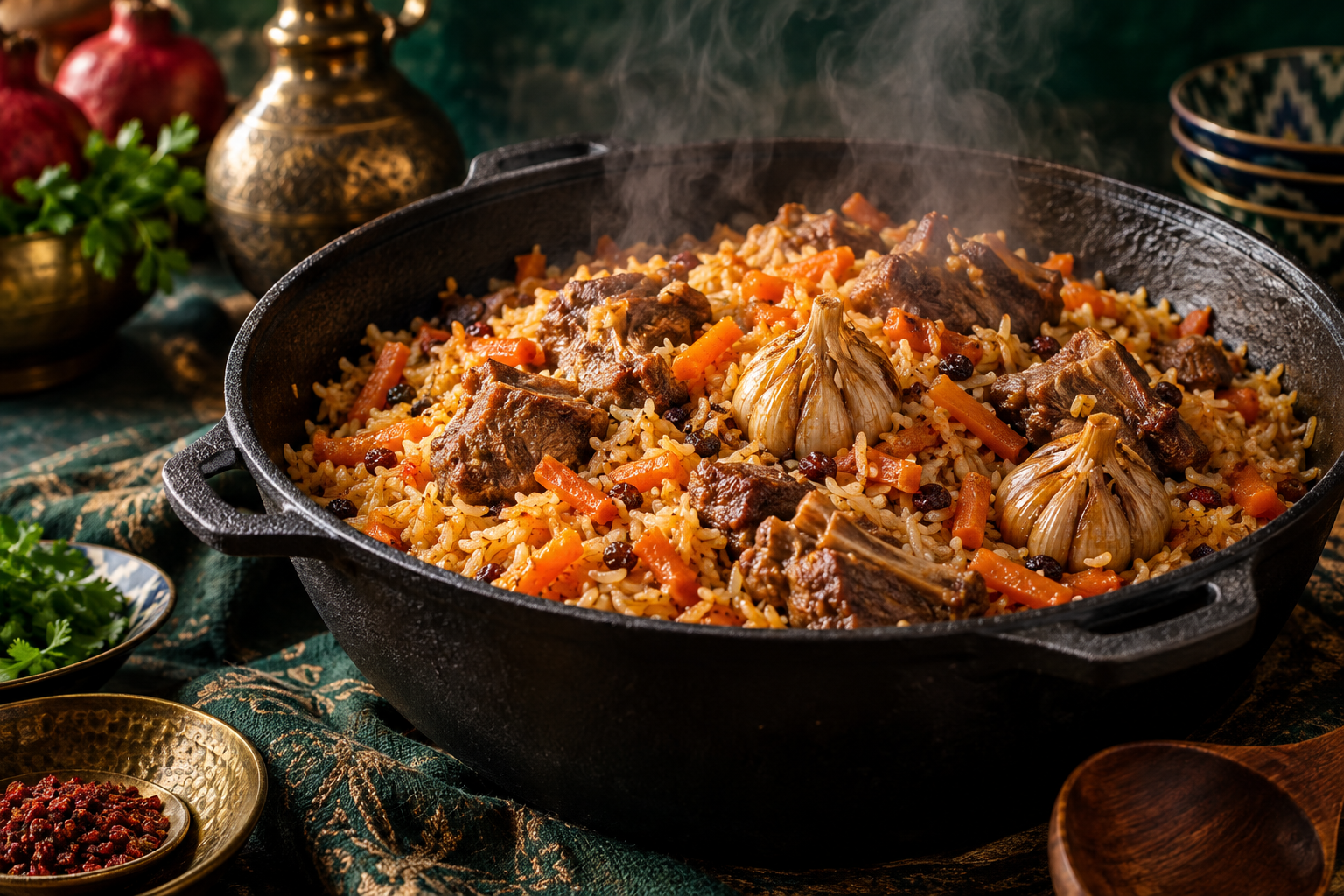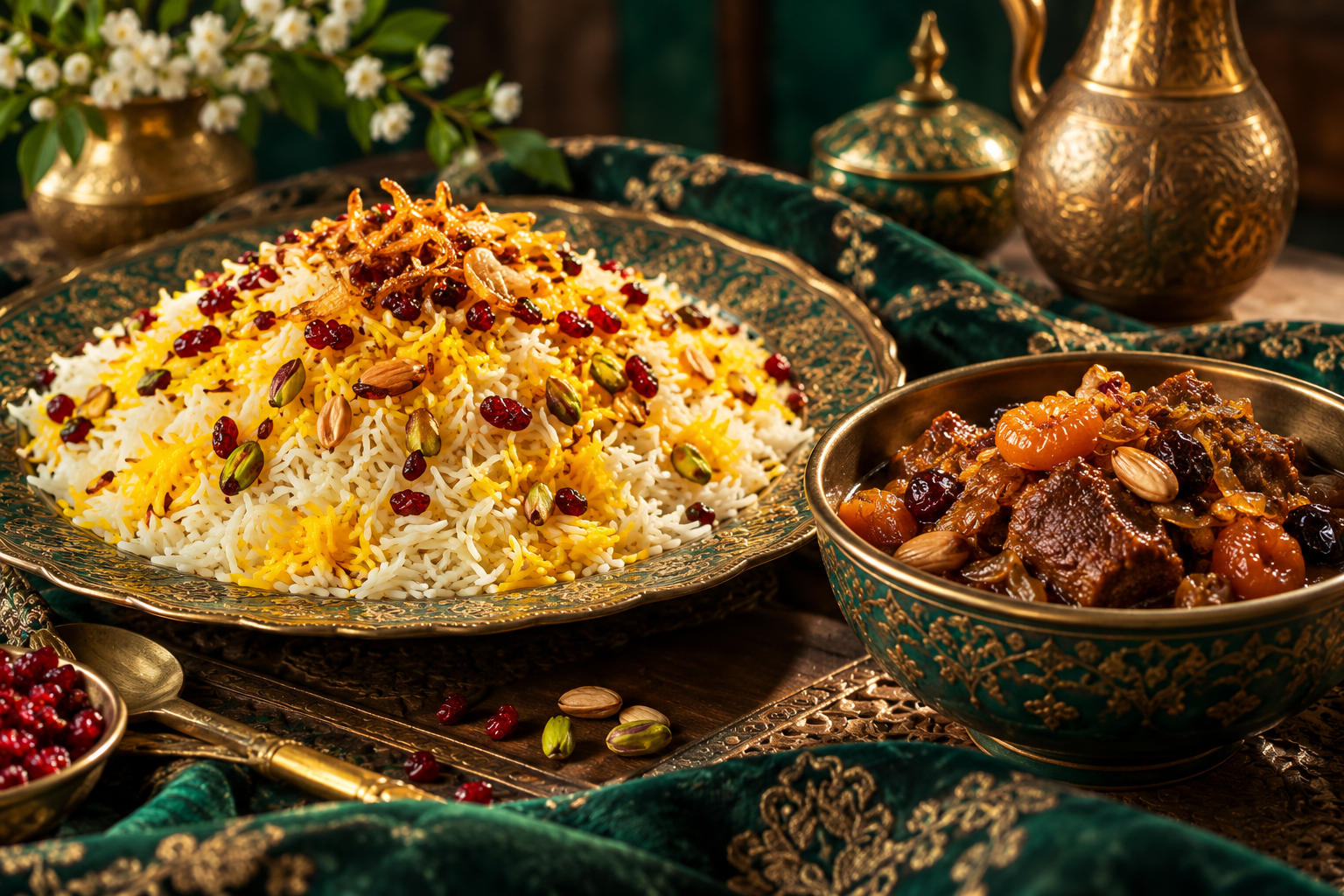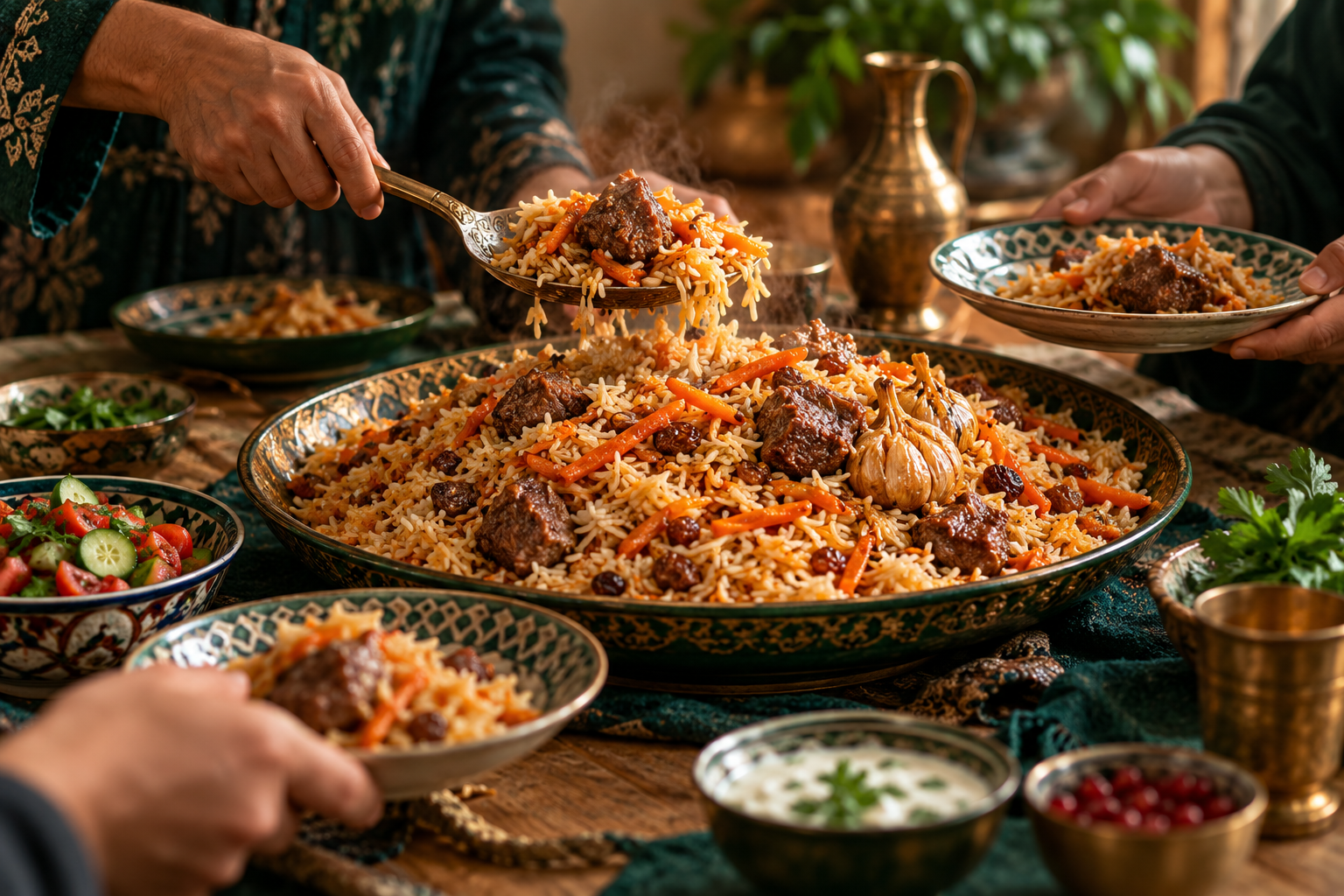
Oshi palav deserves to be introduced by its own name. Comparing it with neighbouring rice dishes can be interesting, but beginning with Tajik voices and cultural context is more useful.
Tajik oshi palav as living food heritage
UNESCO inscribed oshi palav and its social and cultural contexts in Tajikistan in 2016. The entry treats the shared meal as cultural practice. It is a good starting point for learning why preparing and serving this food matters to communities.
A heritage entry is different from a cookbook. Use it to understand the social setting, then find a recipe with a named cook, clear quantities and instructions for your equipment. Do not turn a short description into a complete method by guessing.
Compare recipes respectfully
Put two recipes beside each other and compare the rice, the cut of meat, the vegetables and the order of cooking. Record differences as differences between those recipes. Two households cannot stand in for a whole country.
If you adapt a recipe, say so plainly. Using a different available rice may be practical, but its liquid needs can change. A substitution also changes what you can honestly say about the finished dish.
Make the meal a conversation
For a gathering, introduce the dish as the version you are learning to cook. Share the source rather than a sweeping origin story. Keep space for diners who know another method, and write down what they would do differently. Read about food and the Silk Roads.
Frequently asked questions
Is oshi palav the same name as Uzbek palov?
They are related food terms used in different cultural settings; preserve the name of the recipe’s source.
When was the Tajik tradition listed by UNESCO?
In 2016.
What is Tajik oshi palav?
It is a named Tajik food tradition with social and cultural context described in the UNESCO resource below. Begin with that identity, then seek a complete recipe from a named cook rather than assuming that every neighbouring rice method is identical.
How do I find a Tajik plov recipe?
Look for clear quantities, a preparation sequence and information about the cook or community. Prefer an explained source over an unattributed image. Keep cultural research and actual cooking instructions as related but separate tasks.
Can I adapt oshi palav to local rice?
You can make an adaptation, but record the rice change and use a compatible cooking method. A different available product may require a different preparation. Label your result honestly rather than promising an unchanged original.
What can I compare between Tajik and Uzbek plov?
Compare two specific recipes: grain, base ingredients, cooking order and serving. Present the observations as differences between those examples. Avoid claiming that two household recipes define all cooking in two countries.
Sources & editorial notes
Original Tales & Table editorial guidance. Linked sources support the cultural, rice or safety points identified in the text. Recipe ideas are original kitchen drafts and have not been tested by our kitchen.