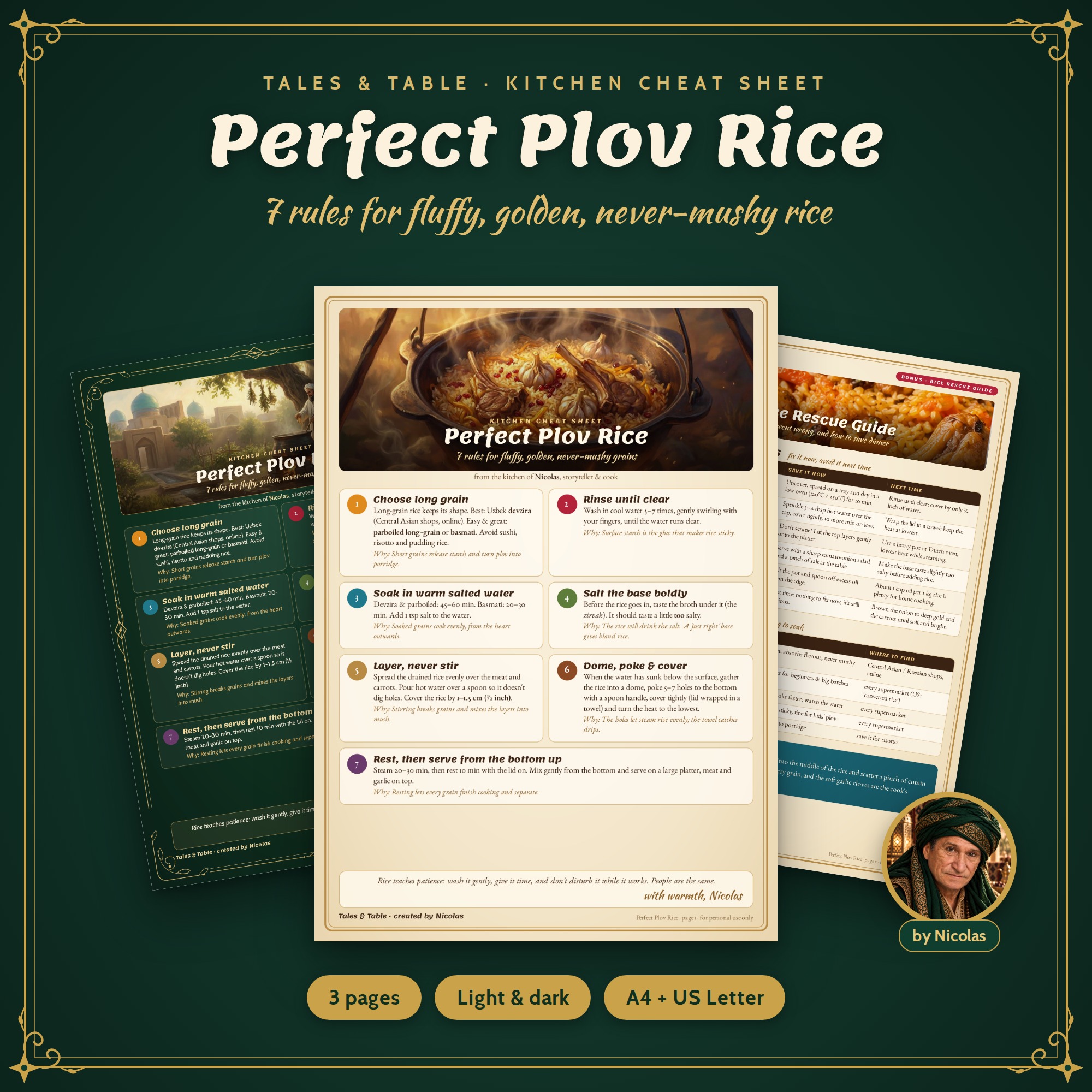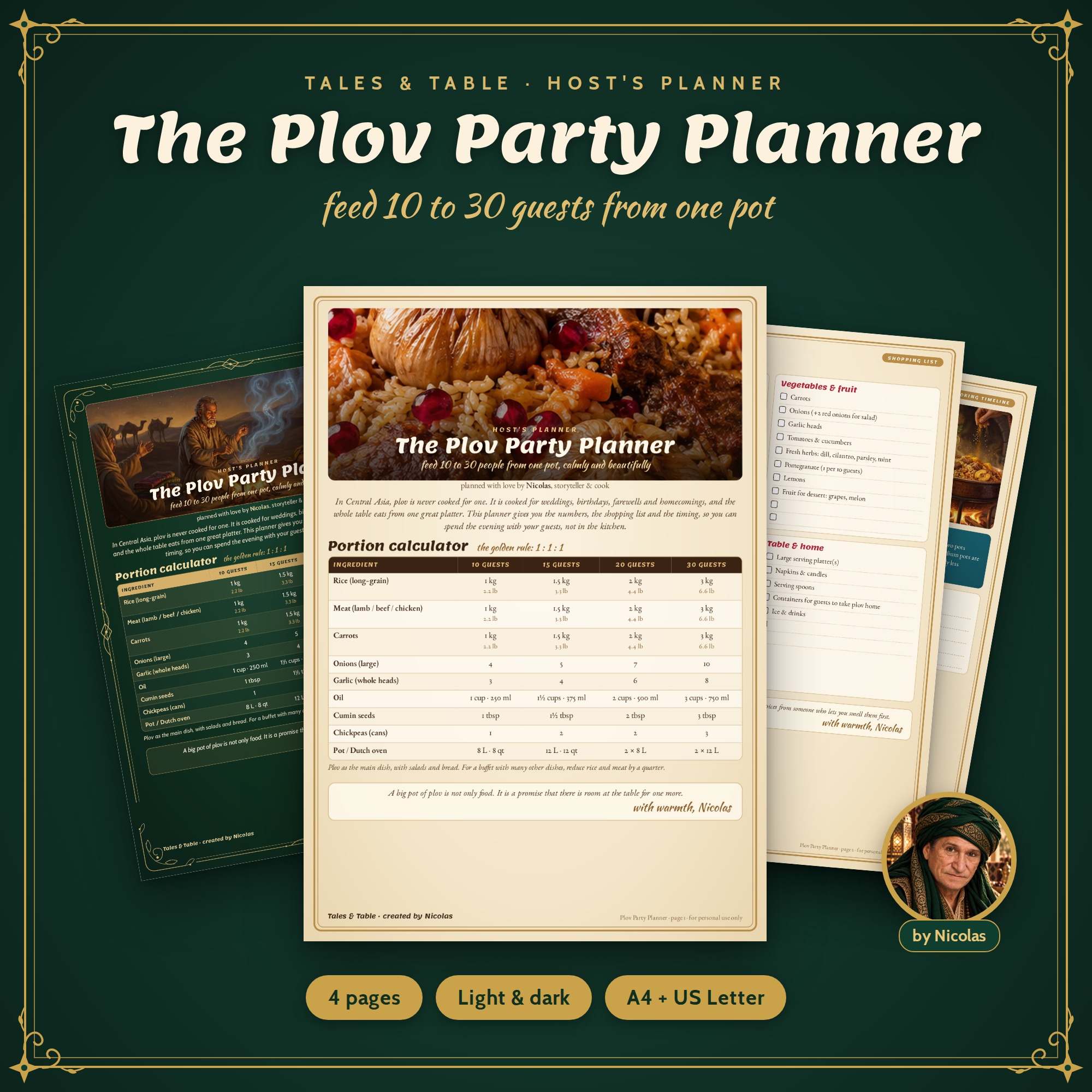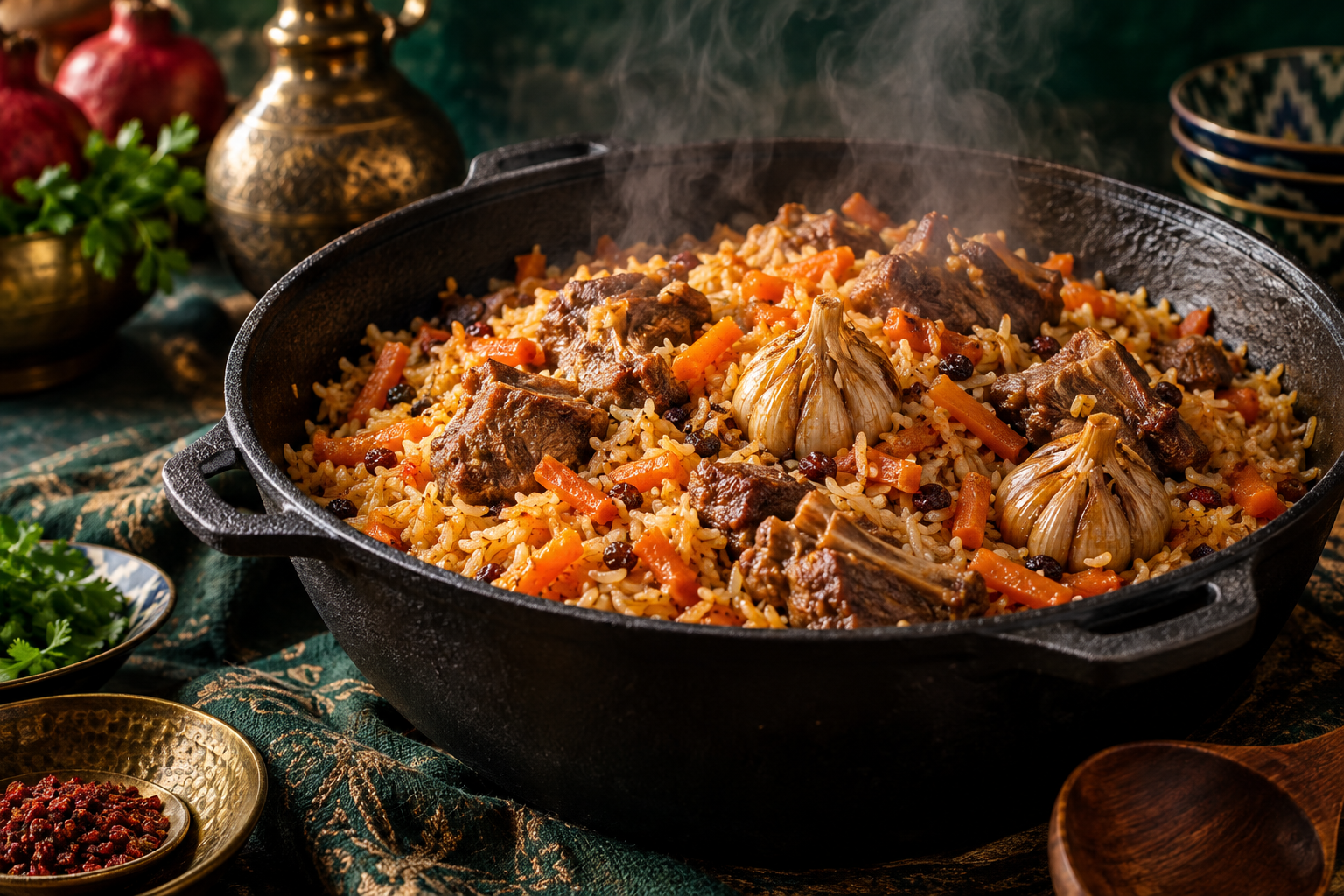
A useful introduction to Uzbek plov begins with the cooking sequence. Browning, simmering, layering rice and finishing gently are separate jobs, even when they happen in the same pot.
Uzbek plov starts with the seasoned base
Read your chosen recipe’s instructions for the meat, onions and carrots before adding rice. Cut the ingredients to the specified sizes so they finish within the intended cooking sequence. Prepare spices and hot water before turning on the heat.
Keep a record of the pot’s width and the amount of rice. A wide pot exposes more liquid to evaporation than a narrow saucepan. Copying another cook’s water level without considering the equipment can change the result.
Treat the rice stage as its own task
At the point where rice goes in, the base should already have the flavour and tenderness the recipe expects. Spread the grains evenly, add the measured liquid and follow the instructions about stirring and covering. Resist adding random handfuls of vegetables during this stage.
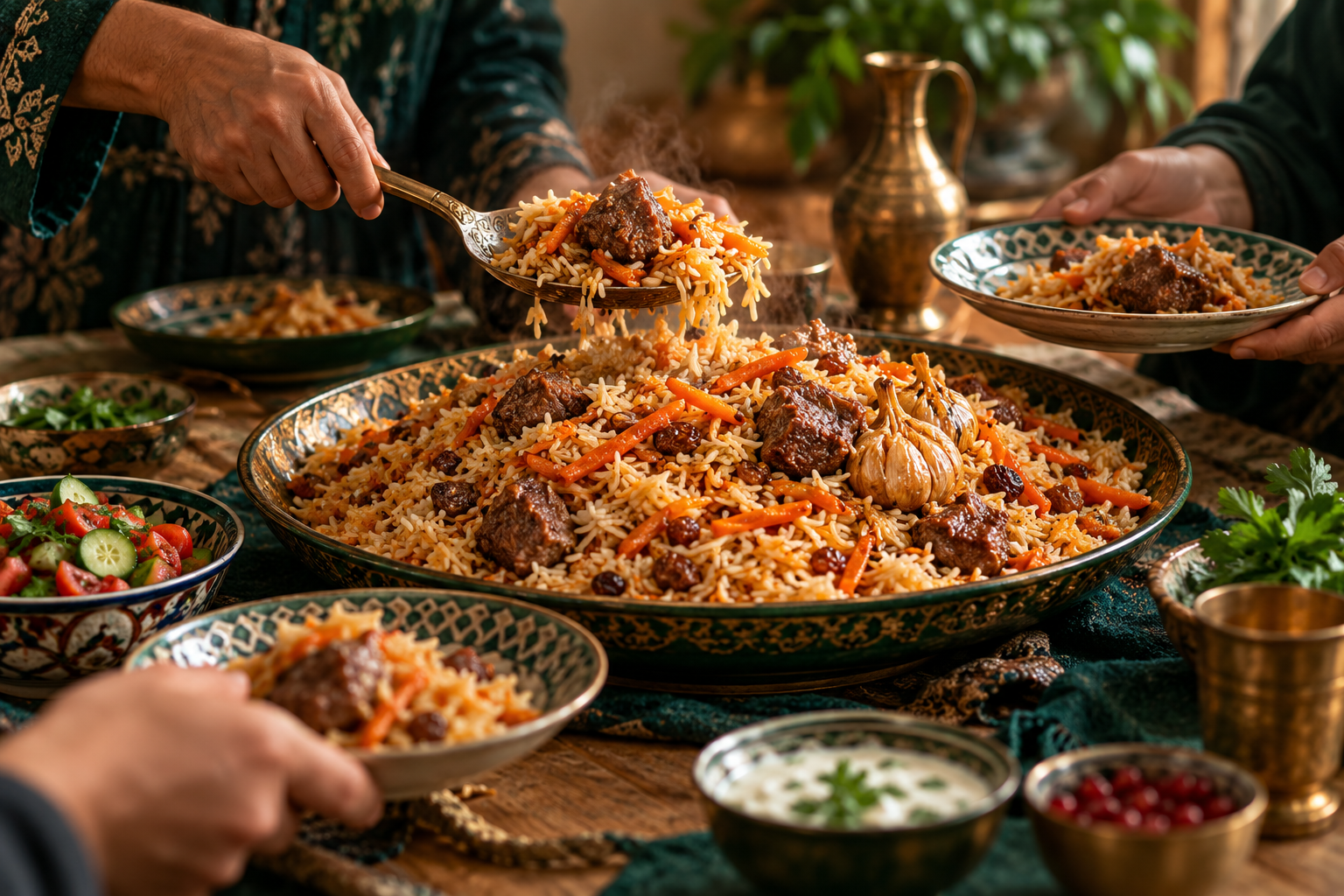
When the dish is ready, give it the rest specified by the recipe. Serve with enough care that the lower layer and the rice both reach each plate. A spoonful of the base is part of the dish, not something to leave behind.
Hospitality without invented rules
UNESCO links Uzbek palov to community life and the passing on of cooking knowledge. You can honour that context by naming the recipe’s source and letting guests share their own food memories. There is no need to invent an ancient ritual for your dinner.
Continue reading: Tajik oshi palav: food, identity and the shared meal.
Frequently asked questions
Can a beginner cook Uzbek-style plov?
Yes: start with a small, clearly written recipe and prepare the ingredients first.
Does this guide replace a full recipe?
No. Use a recipe with quantities and equipment instructions for cooking.
How do you cook Uzbek plov at home?
Begin with a detailed recipe and a batch compatible with your pot. Prepare the base before the rice stage, measure additions and follow the specified finish. The cultural guide here supplies context; it does not replace quantities and equipment instructions.
What ingredients are used in Uzbek plov?
Check a named Uzbek recipe for the exact rice, meat, vegetables, seasoning and fat. Record where that recipe comes from. A list from one cook should not be described as the only combination used throughout the country.
Can I use chicken instead of lamb in plov?
Use a chicken-specific variation. Changing the meat changes how you coordinate its cooking and safety with the grain stage. Do not preserve a lamb simmer without checking what the chicken recipe requires.
Why should plov rest before serving?
Use the rest prescribed by your recipe as part of its finish and plan it into serving time. Do not immediately stir and serve because guests have arrived. Record how the result behaves when lifted and portioned.
Sources & editorial notes
Original Tales & Table editorial guidance. Linked sources support the cultural, rice or safety points identified in the text. Recipe ideas are original kitchen drafts and have not been tested by our kitchen.