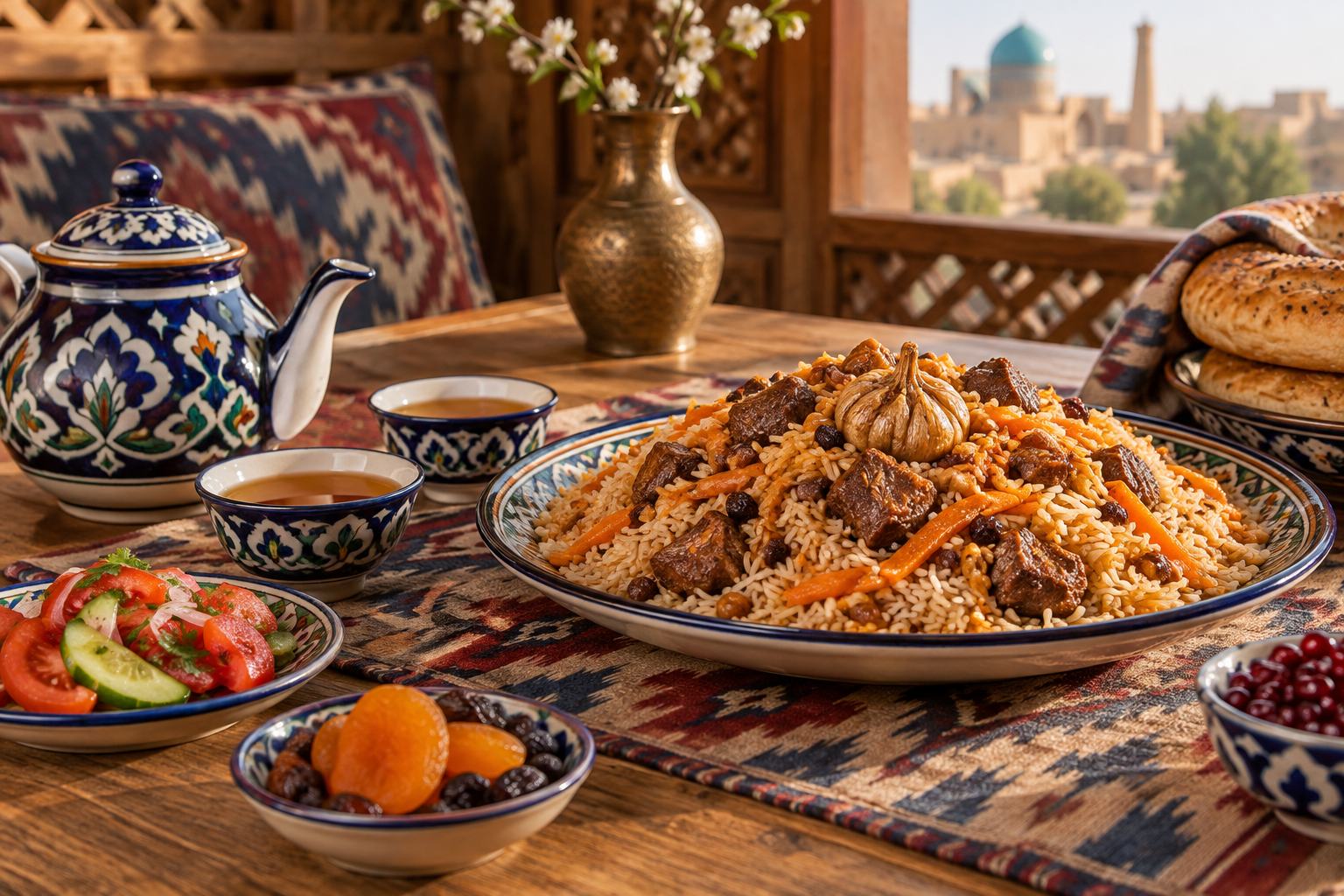
A cup of tea and a shared rice dish can both open a conversation. Their cultural meanings deserve precise names and places.
Tea and plov in distinct hospitality traditions
UNESCO describes Uzbek palov as a dish made and shared in homes and communities, including for hospitality. A separate UNESCO entry records the culture of Çay in Azerbaijan and Türkiye as a practice that builds social ties. These entries do not define a single combined ritual.
The overlap is a useful theme for readers: offering food and drink can welcome someone. It is not evidence that every household serves tea and palov in the same order.
Host without inventing custom
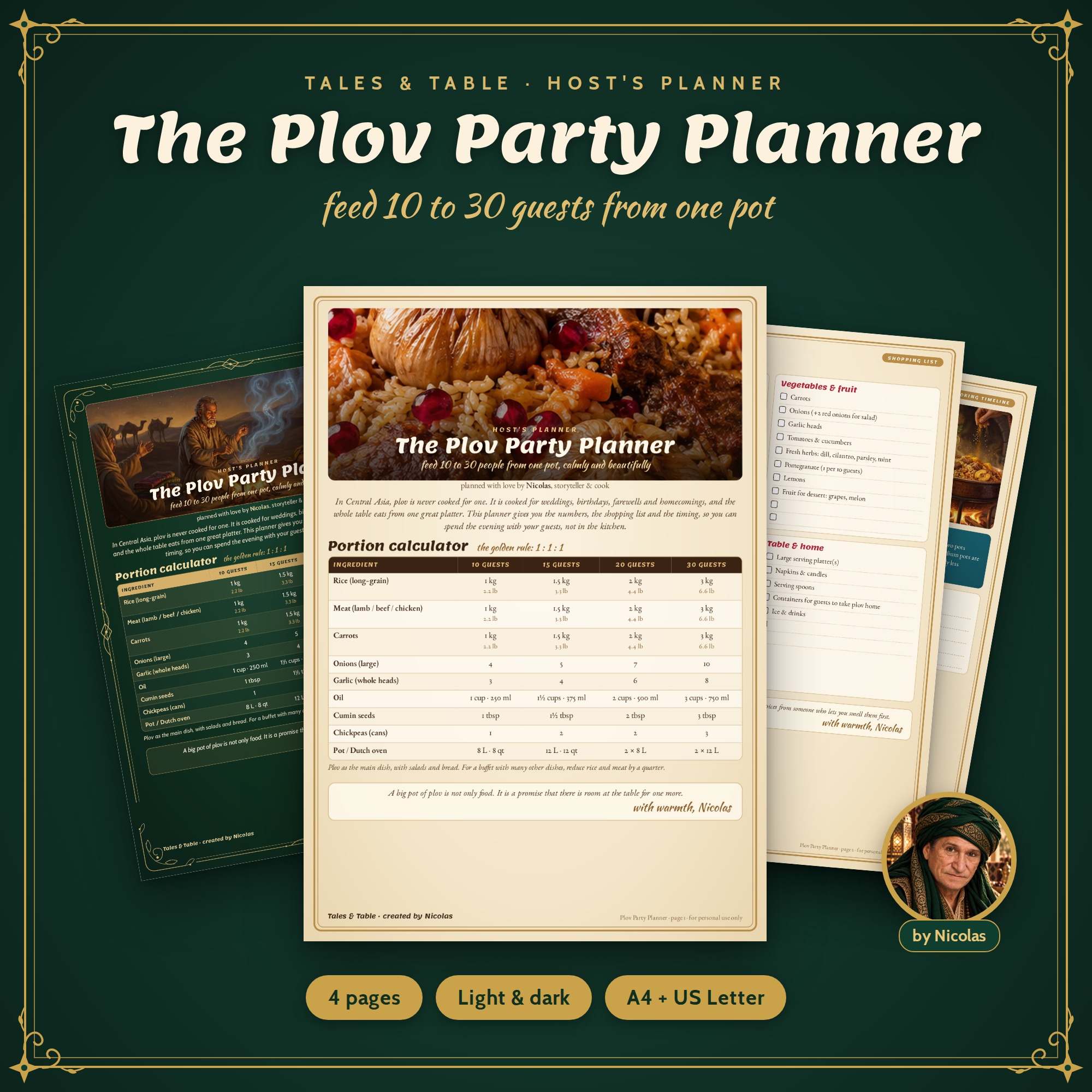
If you serve tea with dinner, ask what your guests enjoy. Provide a fresh pot, water and a simple meal plan. Name any borrowed recipe or serving idea. If you have learnt a custom from a particular family, credit that experience rather than applying it to a whole region.
A table can be warm without theatrical claims of authenticity. Make comfort, timing and conversation the focus.
Read further
The tea entry explains its own communities and forms of service. The palov entry explains a different living tradition. Read both, then explore the palov heritage guide before making broader claims.
Frequently asked questions
Is tea part of every plov meal?
No. Do not assume one serving pattern applies to all families.
What does UNESCO say about palov?
It identifies making and sharing palov as part of hospitality and social life in Uzbekistan.
Which tea tradition is cited here?
UNESCO’s culture of Çay entry concerns Azerbaijan and Türkiye.
Can I create my own dinner format?
Yes. Describe your format as your own hosting choice.
Sources & editorial notes
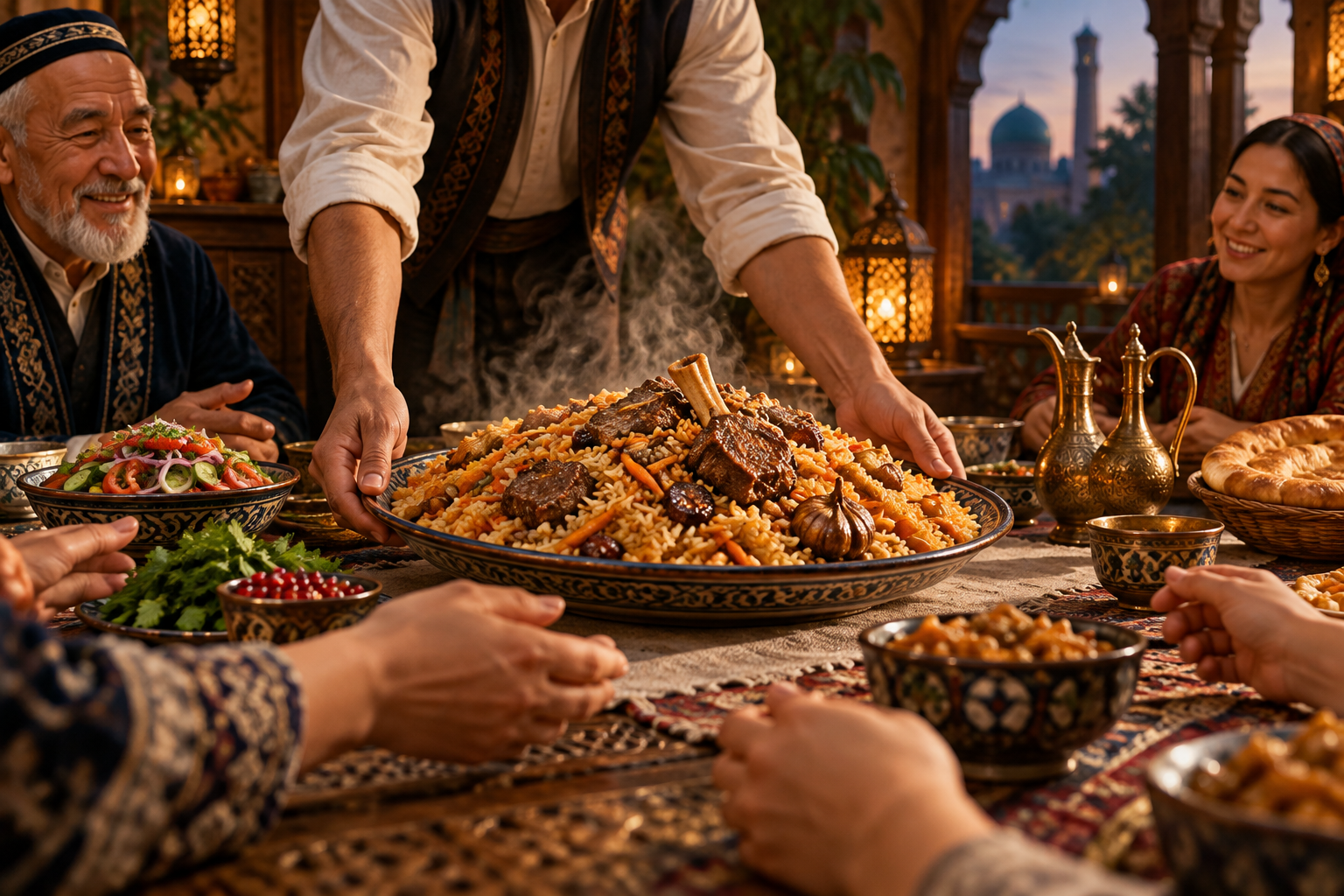
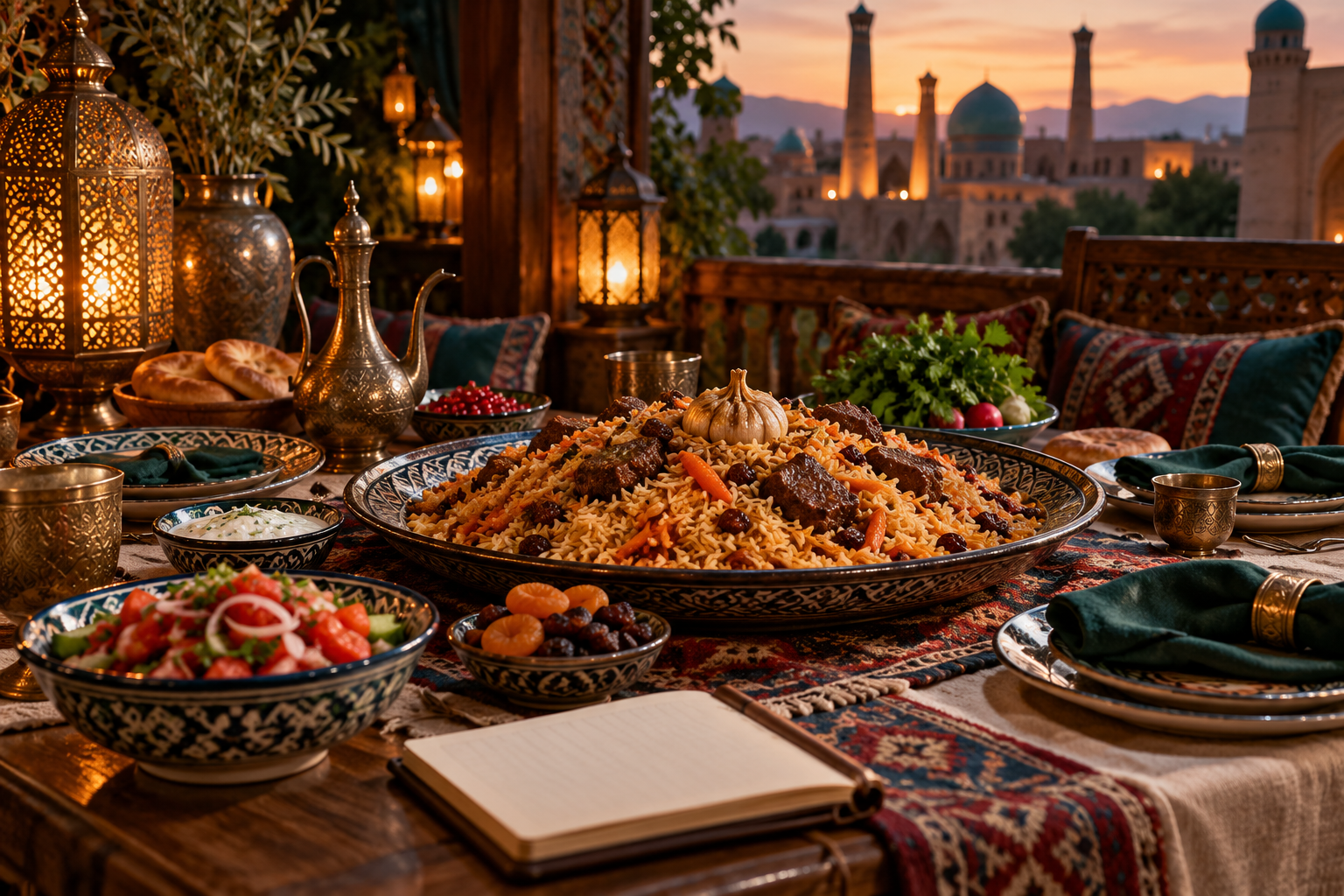
Historical and cultural statements are attributed to the linked sources. The image is an AI-generated editorial interpretation, not a documentary photograph. Practical suggestions are original editorial guidance; any cooking examples are untested drafts.