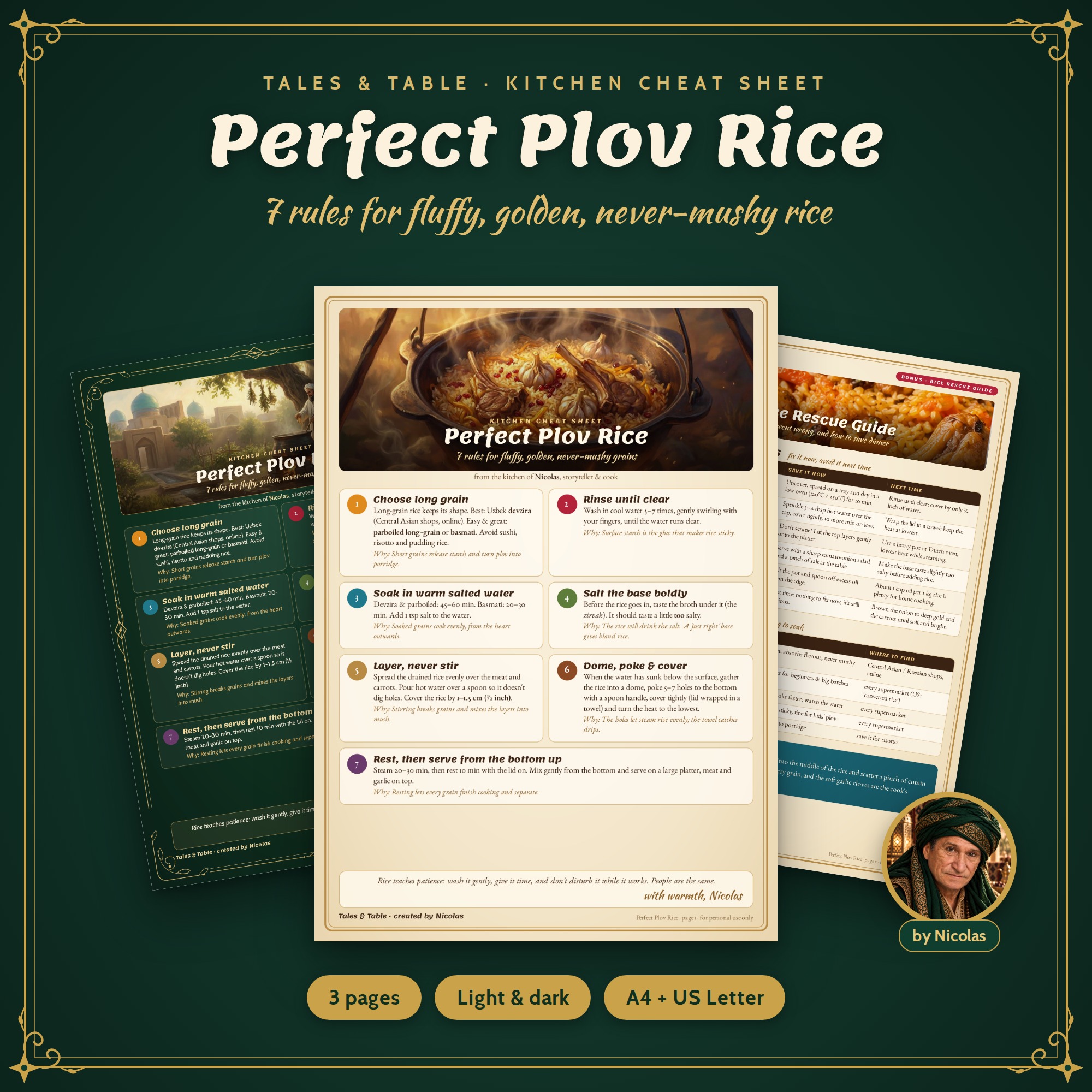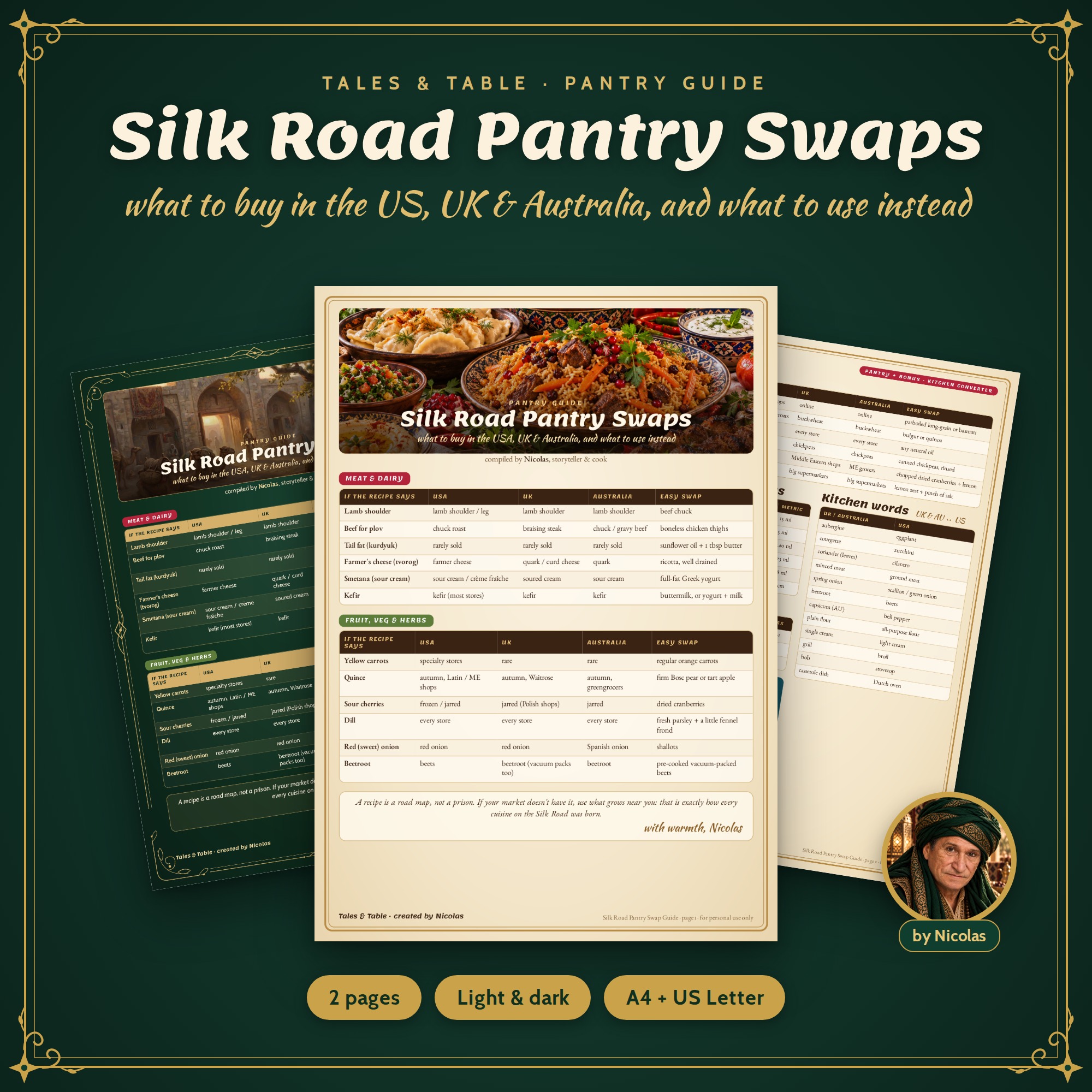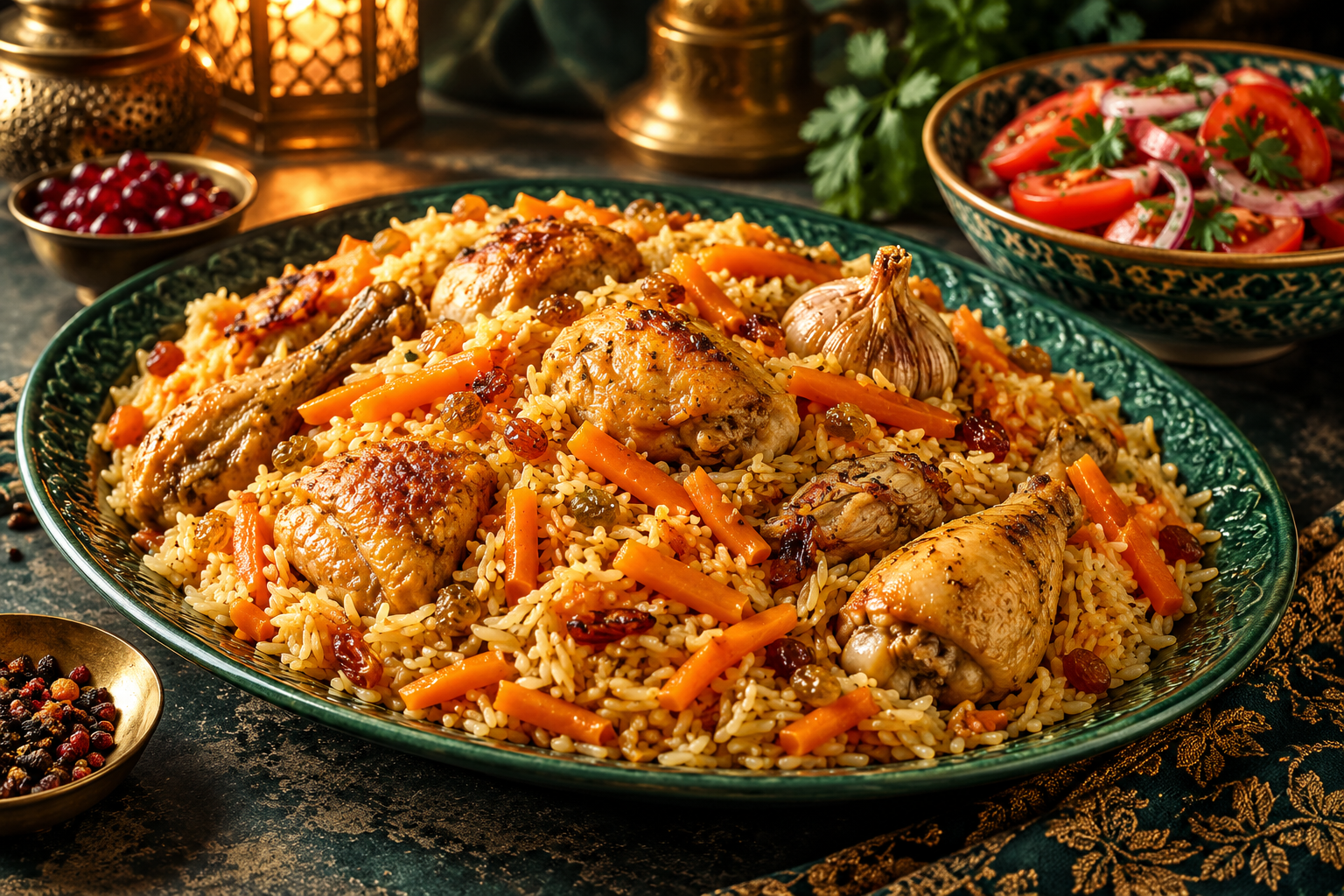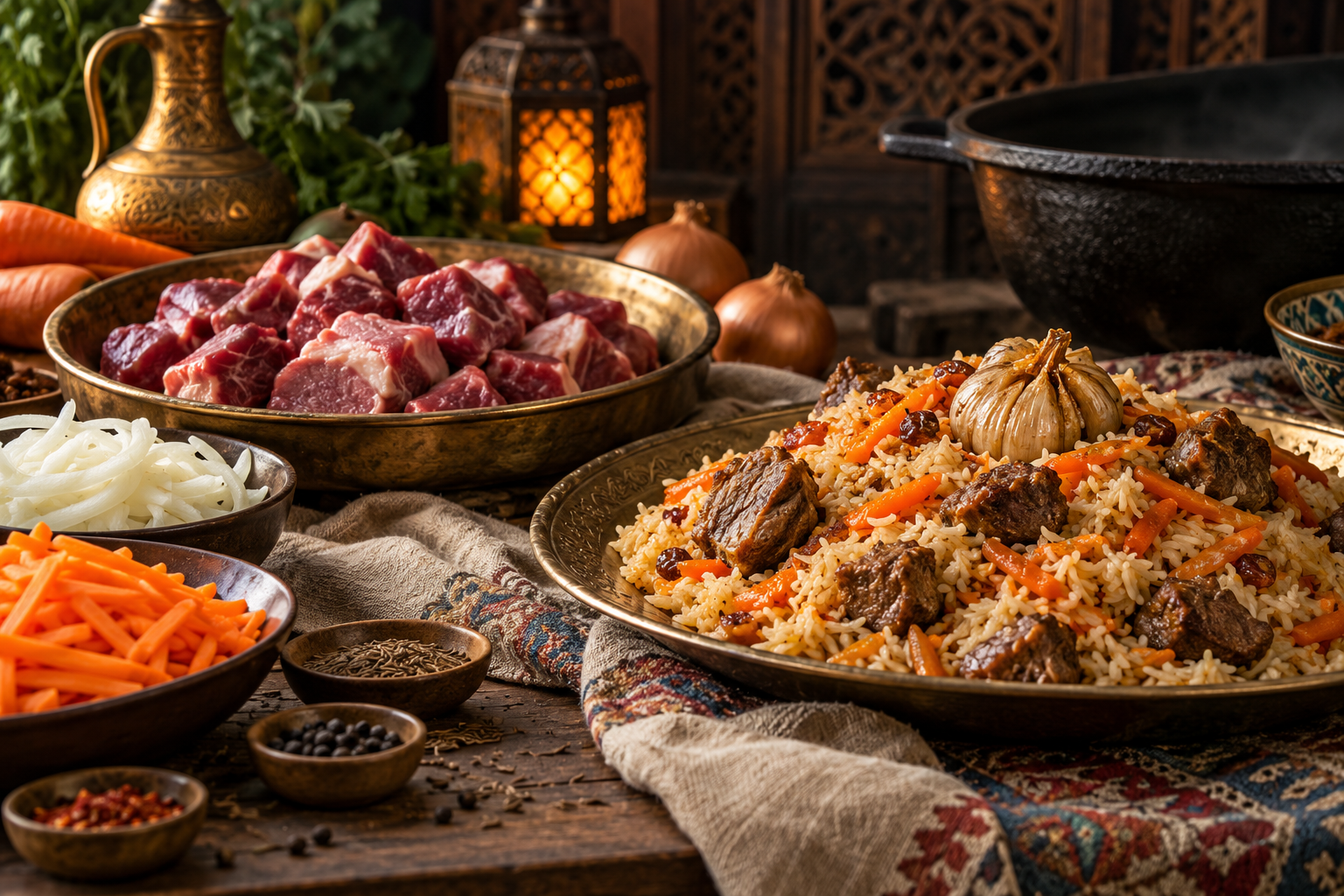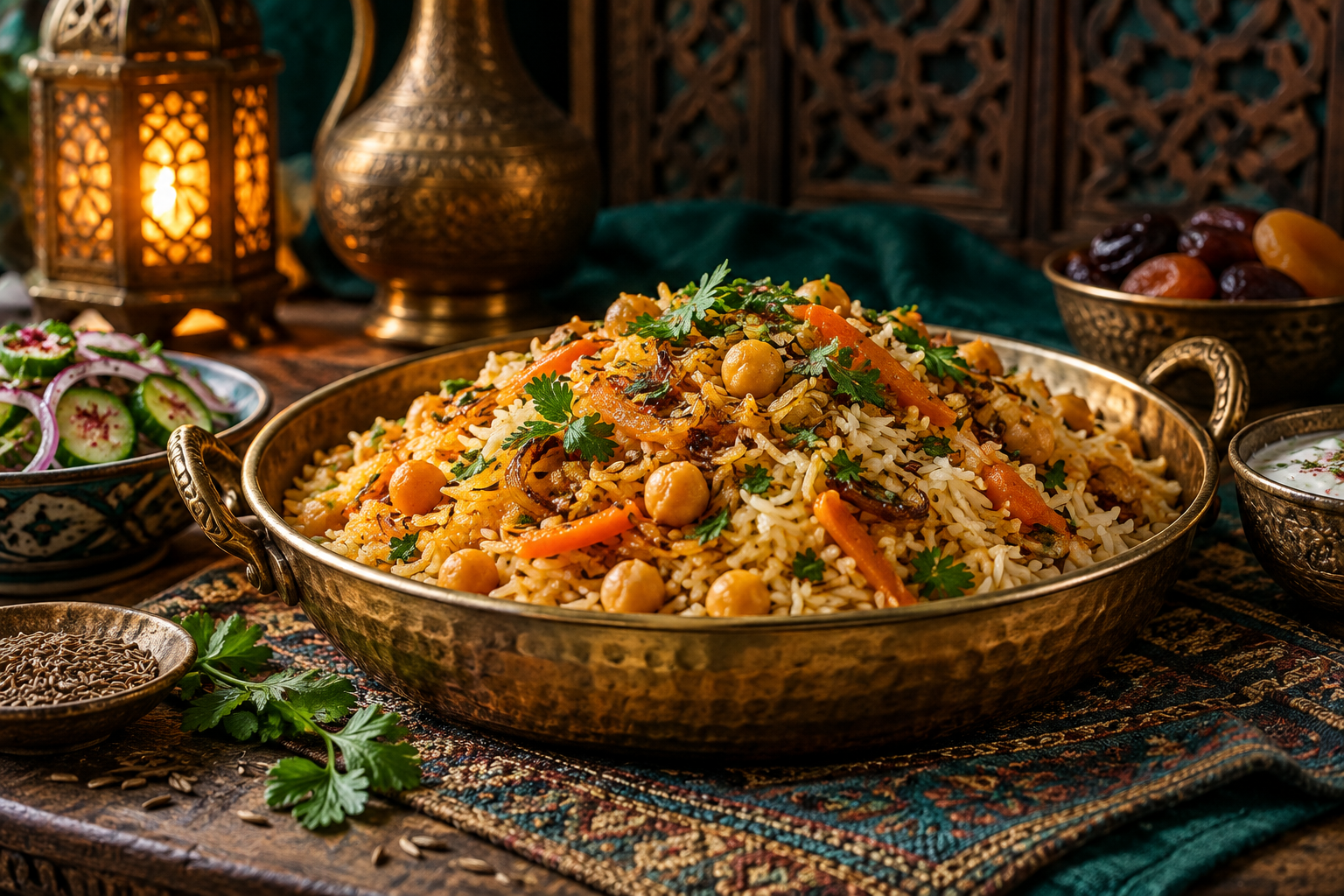
A vegetarian version needs its own balance. Chickpeas provide substance, but they do not produce the same base as meat. Plan the dish as a complete vegetable-and-grain recipe.
Plan a vegetarian chickpea plov
For four servings, begin with 300 g long-grain white rice, 400 g drained cooked chickpeas, 350 g carrots in batons, one onion, one garlic head, 2 tablespoons oil and 1 teaspoon cumin. Use vegetable stock if you want an entirely plant-based dish.
Canned or previously cooked chickpeas are the intended ingredient here. Do not swap in dry chickpeas and expect the rice stage to cook them. Prepare rice according to the packet and the chosen method.
Develop the vegetable base
Soften the onion and carrots in the oil in a suitable heavy pot. Add cumin, then the cooked chickpeas. Taste and season the base modestly before the rice goes in, remembering whether your stock already contains salt.
Layer the prepared rice, add the appropriate measured stock and finish using a compatible covered absorption method. This is an original recipe framework: the final liquid and time need a small test in your pot rather than a universal number.
Finish the meal
Lift the rice gently and distribute the chickpeas across the servings. Offer a crisp cucumber or tomato side for a contrast in texture. If you add yoghurt, the meal remains vegetarian but is no longer vegan; keep that distinction clear for guests.
Continue reading: Chicken plov for four: an original home-kitchen recipe.
Frequently asked questions
Can I use uncooked dried chickpeas here?
No. This framework calls for cooked chickpeas.
Is vegetarian plov automatically vegan?
Only when stock, fat and serving accompaniments are also plant-based.
How do I make vegetarian plov with chickpeas?
Use the cooked-chickpea framework in the article and a compatible rice method. Develop the vegetable base, keep liquid measured and distribute chickpeas across the finished portions. Dry pulses require a different preparation, not an unchanged swap.
Can I make vegan plov?
Use plant-based fat, vegetable stock and plant-based serving accompaniments. Read labels rather than assuming that a vegetarian recipe is automatically vegan. Plain yoghurt changes that distinction even if no meat is present.
Should I use canned chickpeas for vegetarian pilaf?
Canned or otherwise cooked chickpeas fit the framework here. Follow the specified draining instructions and measure the ready ingredient. Do not use the total weight of an unopened can as though it were the drained-food amount.
What can I serve with meat-free plov?
A crisp vegetable side adds a contrasting texture. Consider the whole meal and the needs of diners. Keep dietary labels accurate for sauces and accompaniments as well as for the main pot.
Sources & editorial notes
Original Tales & Table editorial guidance. Linked sources support the cultural, rice or safety points identified in the text. Recipe ideas are original kitchen drafts and have not been tested by our kitchen.