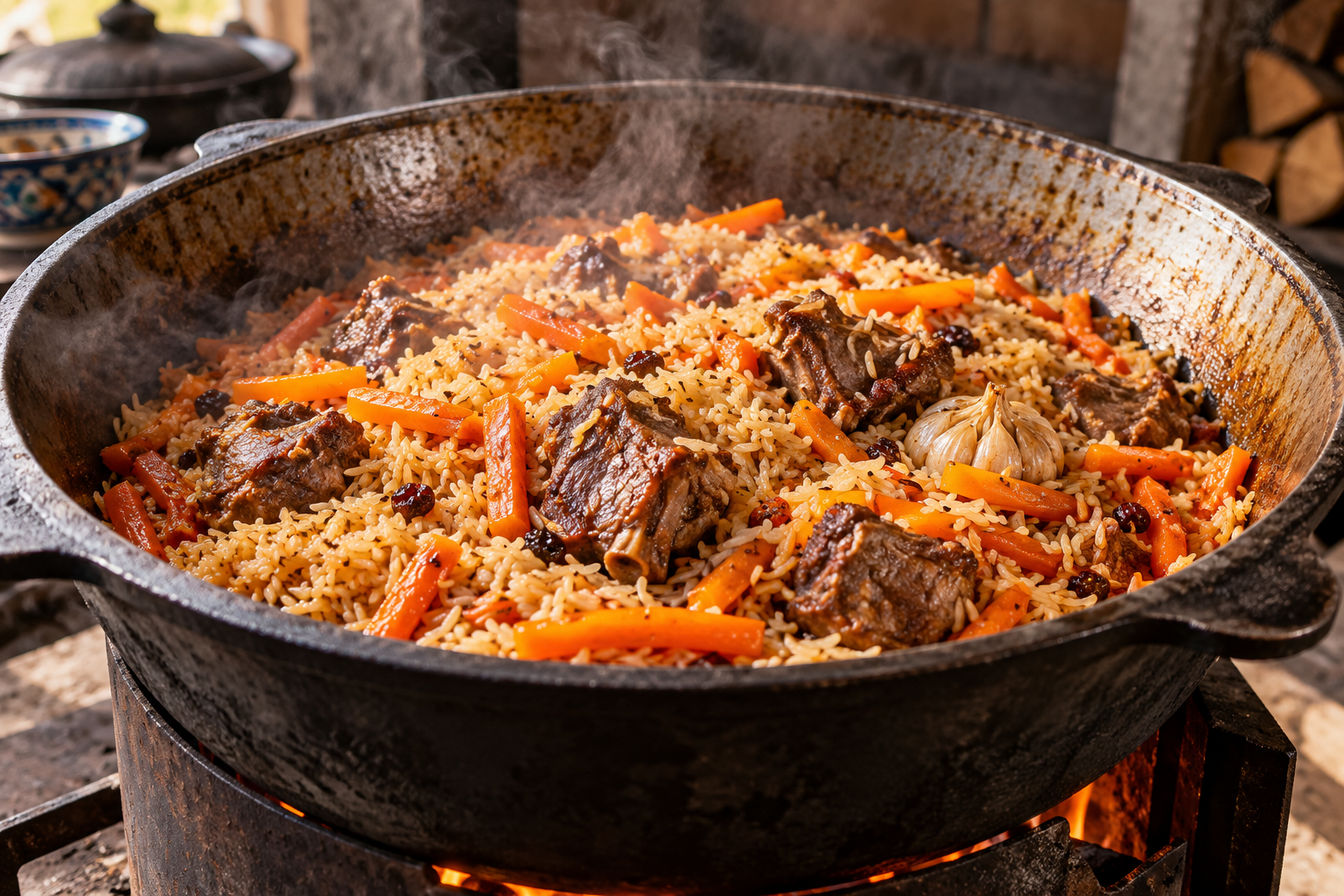
A recipe may name a kazan, but the cooking vessel is more than a label. Capacity, heat source and the recipe’s sequence all matter.
Choosing a kazan or another pot for plov
UNESCO’s palov heritage entry describes the making and sharing of the dish; it does not certify one pot design for every kitchen. Start with a recipe that specifies its equipment, batch size and heat source. Note when ingredients are browned, simmered and steamed.
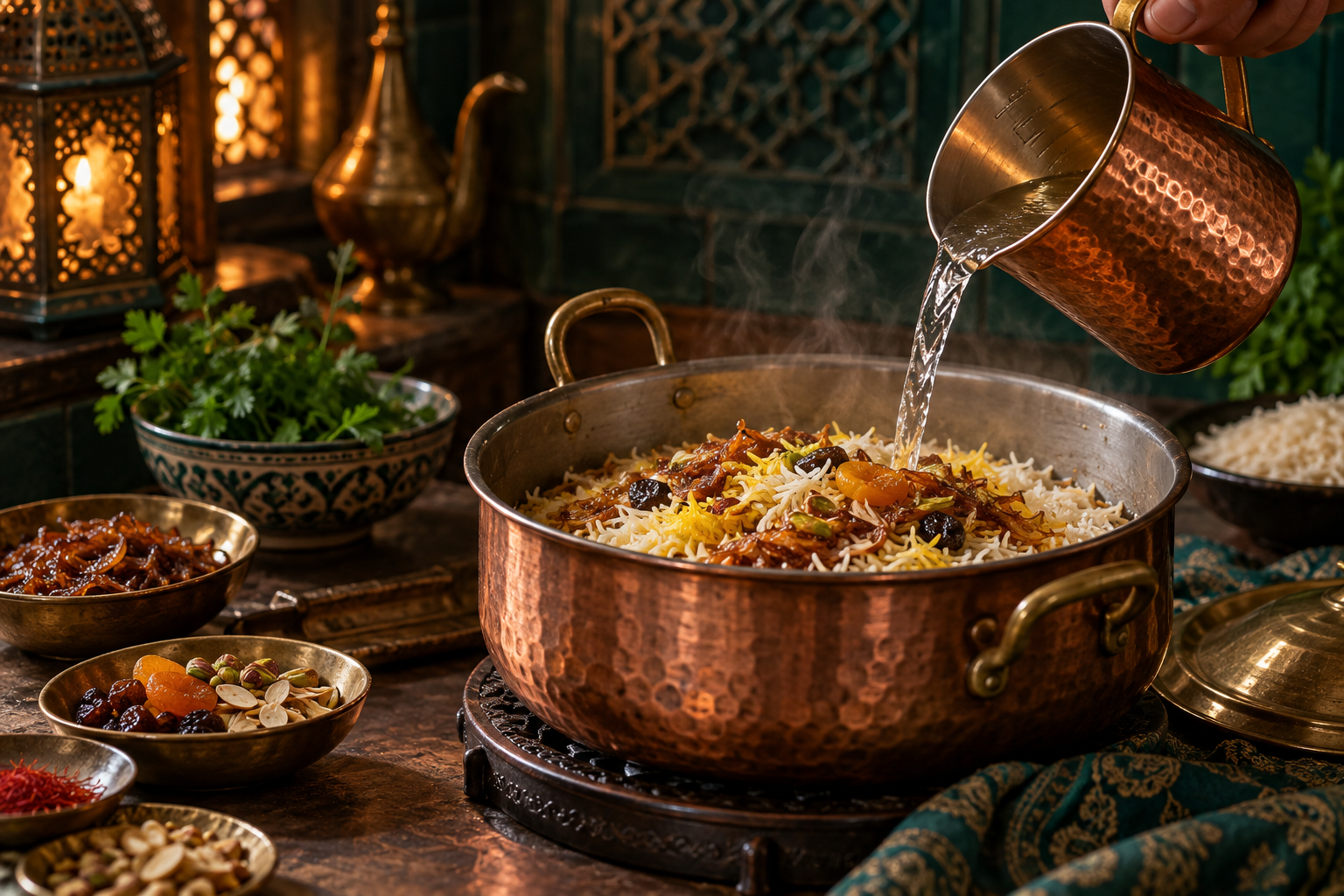
A broad vessel and a deep narrow pot can lose moisture at different rates. If you change the vessel, watch the stages rather than copying a water level by eye.
Check physical fit
Measure usable capacity and confirm that the pot is stable on your stove. Keep handles accessible and allow room to stir the base safely. Follow the manufacturer’s instructions for the heat source and finish. A decorative or unknown metal pot is not automatically food-safe cookware.
For a first batch, use equipment you can control and a modest recipe. Make a note of pot diameter, rice amount and finished texture.
Adapt honestly
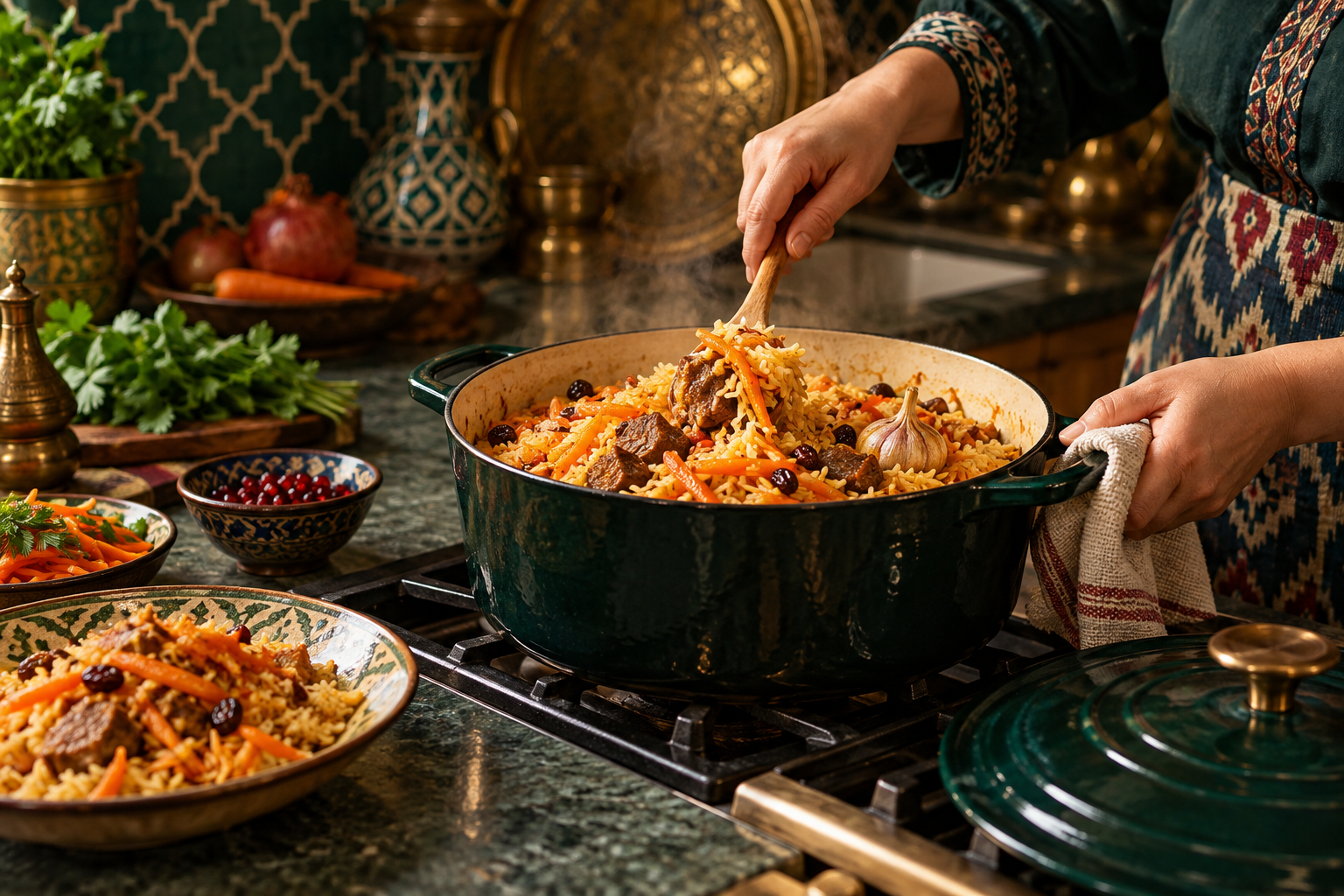
A Dutch oven may be workable when a recipe is written or carefully adapted for it. That is an adaptation, not a promise of the same evaporation and crust. Read the Dutch oven guide before changing cookware mid-recipe.
Frequently asked questions
Do I need a kazan to make plov?
Choose a complete recipe suited to the pot you have; do not assume one vessel is mandatory.
Does pot shape affect rice?
It can change evaporation and heat distribution.
Can I double a batch in the same pot?
Check capacity and use a method tested for the larger quantity.
Is any metal pot suitable?
Use food-safe cookware compatible with your stove and its manufacturer guidance.
Sources & editorial notes
Historical and cultural statements are attributed to the linked sources. The image is an AI-generated editorial interpretation, not a documentary photograph. Practical suggestions are original editorial guidance; any cooking examples are untested drafts.