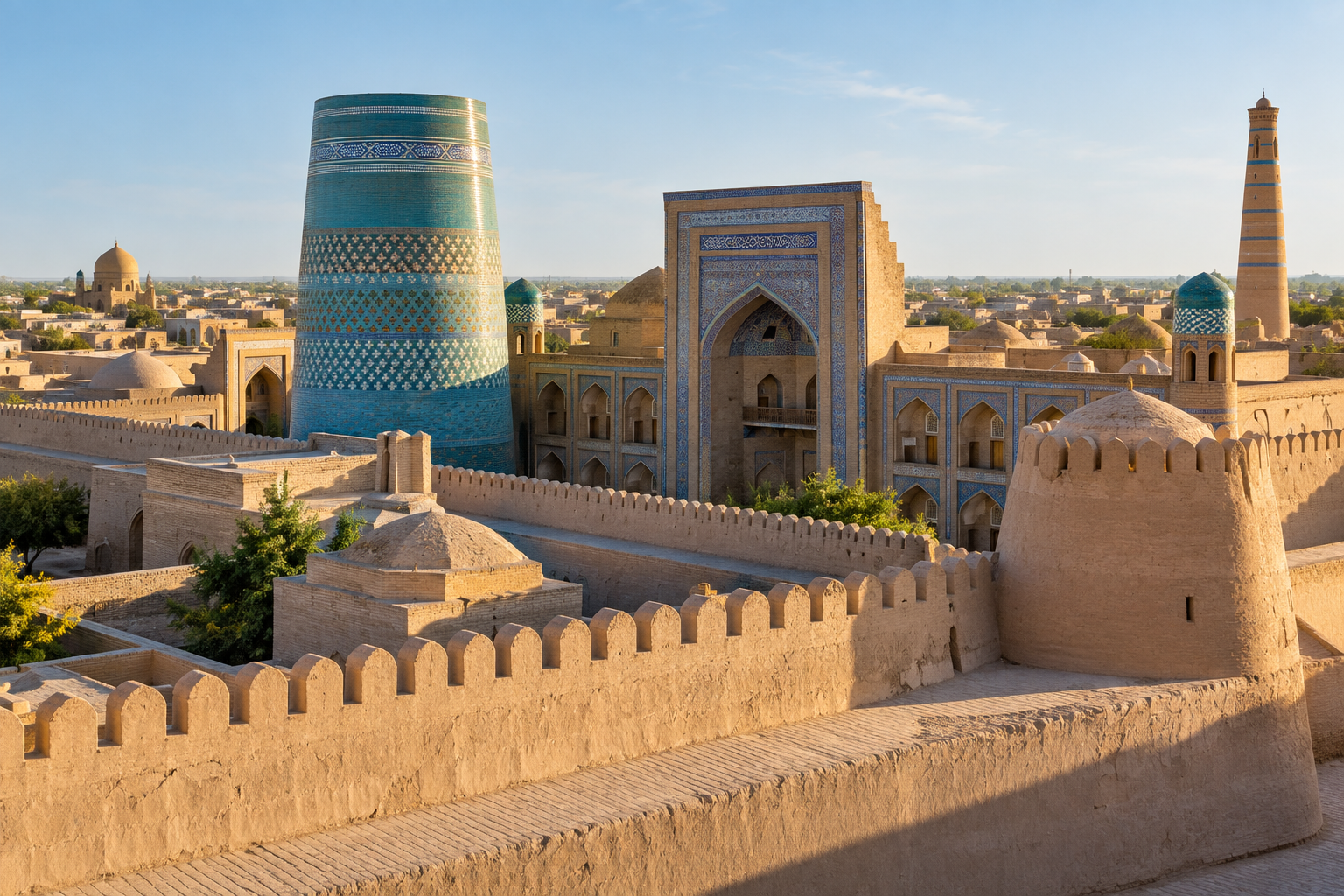
Khiva’s walled inner city is a striking place to begin a cultural journey. It is also easy to ask the buildings to tell a food story they cannot document on their own.
Khiva and the heritage of Itchan Kala
UNESCO identifies Itchan Kala as the inner fortress of Khiva in Uzbekistan’s Khorezm region. Its description places the town on caravan routes and notes its built heritage. The site gives historical context for travel and settlement, not a formula for local pilaf.
Describe a monument by its own name and period before adding a menu. Architecture and cuisine can belong in the same travel notebook without being collapsed into one unsupported legend.
Ask the right food questions
When you encounter a local rice dish, ask who prepared it, what they call it and how it differs from another named recipe. Look for contemporary local cooks or food writers. If a food claim is historical, seek a source that dates it.
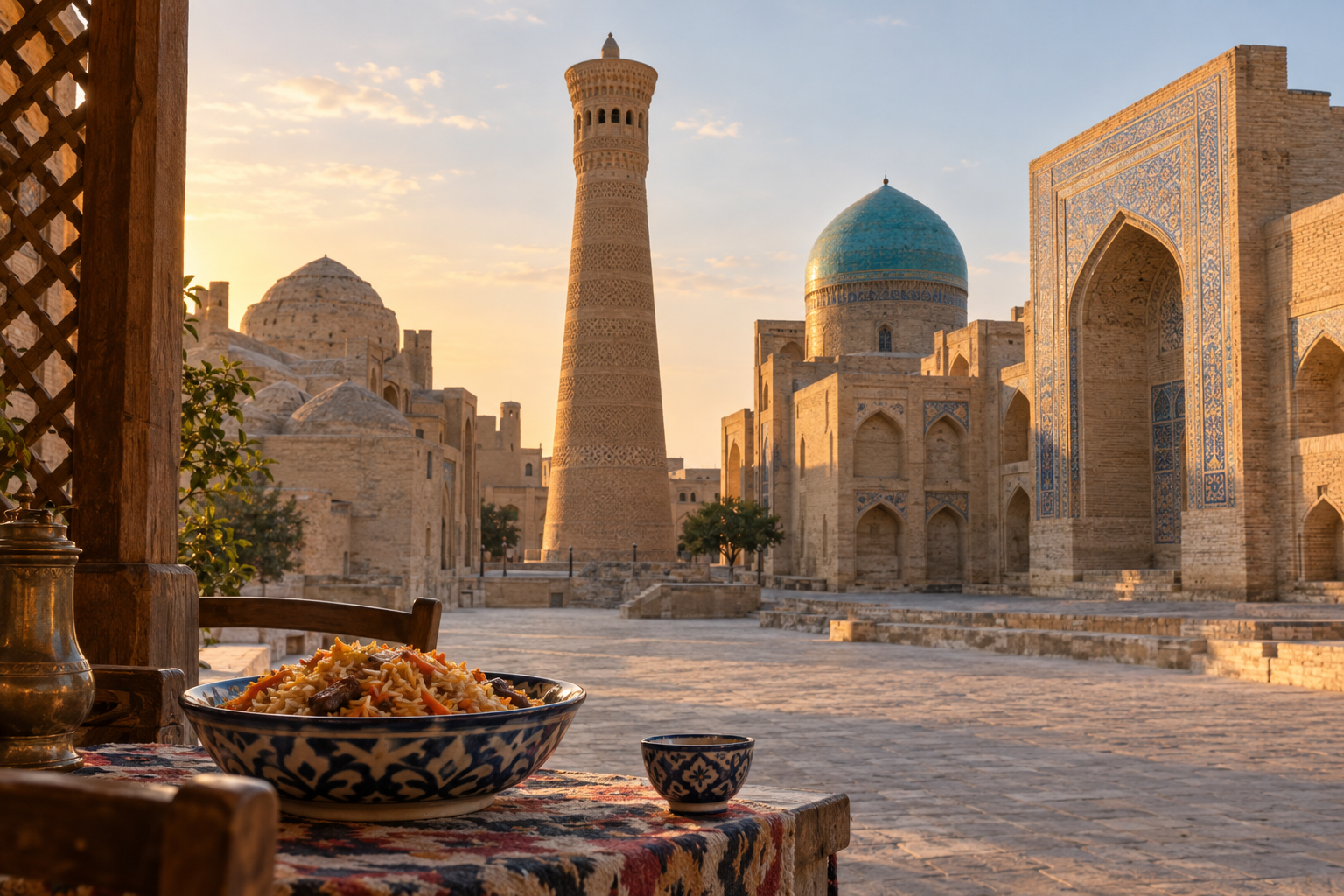
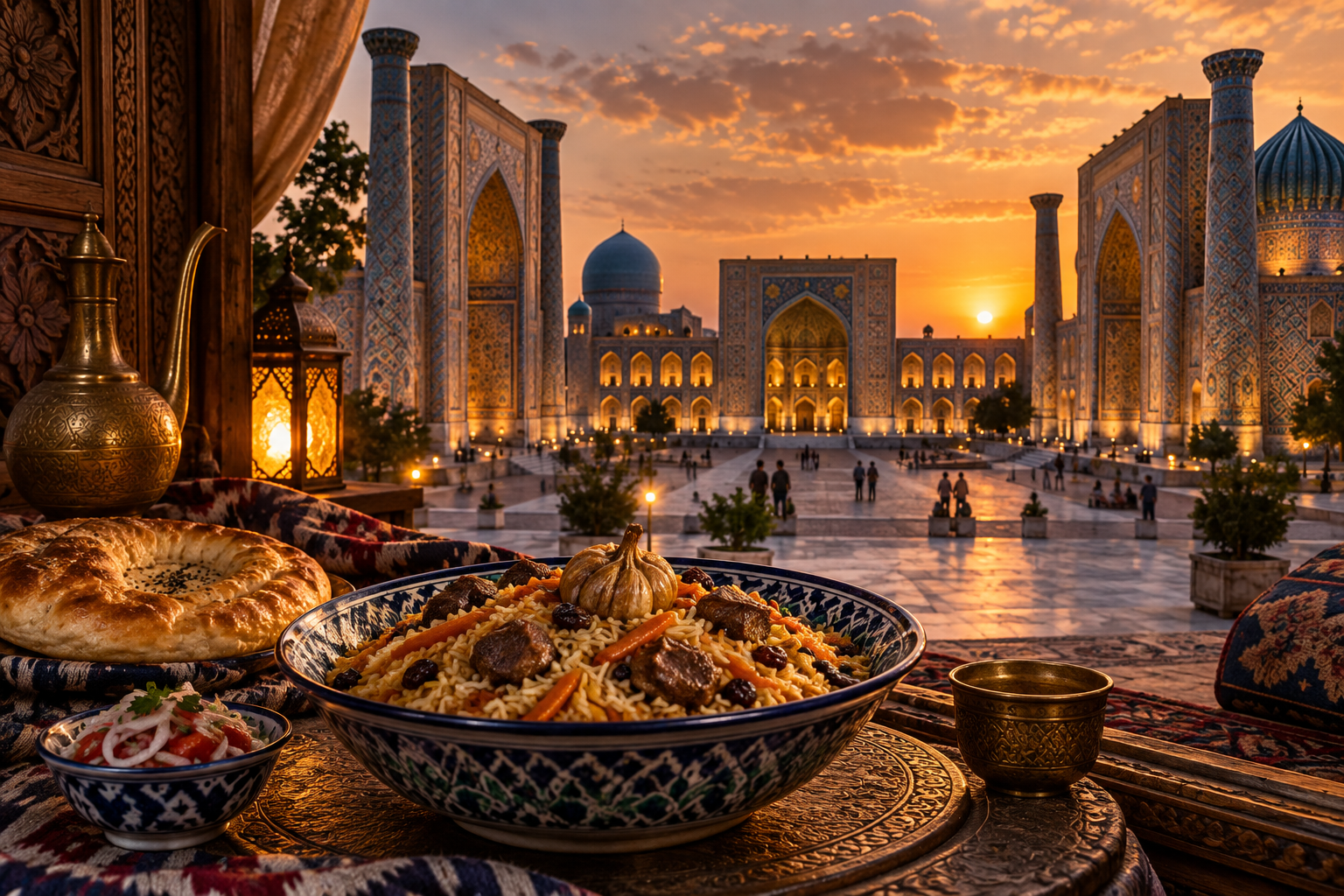
A plate photographed near a famous wall is a modern editorial image. The background does not turn the meal into an ancient reconstruction.
Plan an honest themed evening
Read the UNESCO description, choose a credited recipe and share both sources with guests. Label your table “inspired by our reading about Khiva” if that is what it is. Compare Bukhara as another city with its own history.
Frequently asked questions
What is Itchan Kala?
It is Khiva’s historic inner fortress, described by UNESCO.
Does its inscription document a plov recipe?
No. The cited entry concerns the heritage site.
Is the article image a historical photograph?
No. It is an AI-generated editorial interpretation.
How can I study local cuisine?
Seek named local cooks, food writers and dated evidence.
Sources & editorial notes
Historical and cultural statements are attributed to the linked sources. The image is an AI-generated editorial interpretation, not a documentary photograph. Practical suggestions are original editorial guidance; any cooking examples are untested drafts.